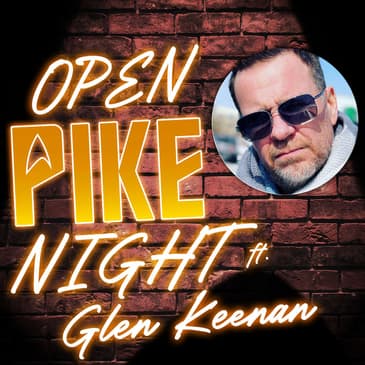



The Open Pike Night crew is joined by DP Glen Keenan to discuss the ins and outs of lighting, shooting, and creating the look of Star Trek Strange New Worlds.
Happy New Year!
- Send your voice hail to OPN
- Email your call to openpike@gmail.com
- Sign up for the OPN Newsletter
- Visit our website OpenPike.com
- Please Check out our Merch
- Support us on Patreon
- Follow @openpike on Twitter
- Follow @openpike.bsky.social on Blue Sky
- Follow OpenPike on Instagram
- Follow Openpike on Youtube
[00:00:00] This is Glen Keenan and you're listening to Open Pike Night on Reflection, an excellent choice. Is this thing on? Hello, hello. Welcome to Open Pike Night, the Strange New Worlds podcast where your personal logs are the prime
[00:00:37] directive. I'm your host, John T. Boldes, here tonight with amazing guests on stage and callers waiting in the wings to talk about Strange New Worlds. Joining me tonight are my co-hosts, the man who can pull focus from even the most dedicated Trek fan,
[00:00:52] host of Sudden But Anesthetical, Jesse. That's right, producer John, and although I can pull focus, I prefer to share the spotlight whenever possible. And the man whose persistence of vision has finally
[00:01:06] led him to start enjoying more Star Trek, host of green shirt, a newbie's Trek through the next generation, Cameron. Hey, persistence of vision, you're some of my first and only college radio show, John. That's right. And here we are 20 years later still talking over microphones
[00:01:21] to each other. Absolutely, absolutely. Our guest tonight is a man who has contributed to the distinct look of modern Star Trek and brought you some of the most beautiful heartwarming, heart wrenching, hilarious, dark and terrifying shots in Strange New Worlds,
[00:01:38] as well as short Trek's end discovery. Please welcome director of photography, Glenn Keenan. Hello, everyone. Thanks for being here today, Glenn. Well, thanks for having me, guys. Very appreciate it. Yeah, excited to get the cinematographer's perspective on Strange New Worlds.
[00:01:54] Yeah, interesting that you guys said, you know, I found that being in Star Trek that the props and the wardrobe and the set design usually come first. So, to be invited here is
[00:02:04] quite the honor. Thanks. Oh, we're glad. We'd love to get the whole crew. I mean, it seems like we're giving some folks a little bit of a film school type education on what
[00:02:16] happens behind the scenes for Star Trek. So, I mean, that kind of leads to the first question for Strange New Worlds. What does a cinematographer do? Yeah, it's an interesting question and it's not as easy to answer as one would like.
[00:02:31] I think the simple version is we, as the director of photography, visualize the script for the producers and the directors. That's sort of the role. The nuts and bolts of it is,
[00:02:44] me and the shooting crew are sort of the last line before it gets recorded. We're the ones who are there with the actors watching a performance, you know, seeing it all happen in front of us
[00:02:54] and then deciding on where the cameras go, what lenses we're going to use, and when we should roll, when the lighting's done, when everybody is ready, we proceed. So, it's a crucial role. Without it, there is no show. As they say, you can do a play with the
[00:03:09] actors but you can't make a movie without a camera. So, you got to have a camera. I like that. Is there much of a difference in a cinematographer's job between the world of film and TV? Are the task breakdown fall about the same or is it different?
[00:03:25] It's the same execution changes tremendously. You know, television is, it's a sprint. You have 10 to 13 days to shoot an hour where a movie these days will shoot two hours and 65 to
[00:03:40] 70 days. So, we are crushed to try to give you guys content. It is a difficult task. We use a lot of multiple cameras to try to get as many pages done in a day that we can. Well, let's go back
[00:03:57] a bit. So, that's what you're up to now. But how did you first get that bug? How did a young Glen Keenan get interested in cinematography? I guess you'd say I was one of the lucky ones.
[00:04:07] I knew at 18 I wanted to be a cinematographer. I was in an art college in western Canada and discovered the word cinematography in a seminar and it just sort of jumped off the
[00:04:21] page to me and I said, well, this might be something. I love science. I love art. Those were always the two things I loved and this seemed like a good combination of the two. So,
[00:04:29] I ended up going to film school from art school and by the time I was 25 I was employable. I had a reel and I was working. I was shooting commercials around the world. It took me a lot longer to
[00:04:42] get into television because at the time this was sort of the 90s where it was the music video generation if you recall. You could make a career in music videos. You could do commercials.
[00:04:52] There was a lot going on visually then and movies were very difficult to get into. So, I was able to just do the commercial music video route until I was about 40. So, I did 15 years of commercials and then at about 40 television took a big turn and all
[00:05:10] of a sudden there were these shows coming out with just amazing shows that Sopranos came out at that time. All these kind of new theories on how to tell a story and I was able to
[00:05:21] transfer myself and got a job on Nikita which was the reboot of that. So, I did that was my first introduction to television and I realized the thing that I had been missing doing these commercials in music videos was storytelling. You shoot a commercial for 30 seconds and you
[00:05:42] tell yourself you're doing a little mini movie but the reality is when you have a dynamic cast doing things in front of you and you get to actually photograph them there was nothing
[00:05:53] more satisfying. So, I was hooked on longer format at that point and haven't looked back since then. So, that was 15 years ago I guess now. Was that a revelatory moment on set then or
[00:06:04] I mean had you been really aiming to do narrative films? No, I wanted to get into features. That was something but it was a difficult thing to get into. There wasn't that many big movies being made back in those days. I did some second units. I worked with
[00:06:20] some great directors, Ron Howard on Cinderella Man. I did some of these things but to get a main unit was difficult and this sort of just happened. A colleague was shooting Nikita and said,
[00:06:31] I need someone to come over and I said okay I've never done it but I'll give it a try and I remember driving home in my car from probably the hardest week of shooting I'd
[00:06:39] ever done. 16 hour days stunts and action and very complex work and realized I'd never been more satisfied. Actually it was enjoyable and then to see your work in an hourly format you know the one thing that was also happening is people weren't going to movies as much as
[00:06:59] they were staying home watching them what have you and then there was this tell that you just knew people were gonna watch it. You could make this great movie that nobody ever saw
[00:07:06] but when it was on Fox and NBC and all these stations you had a good chance there was an audience that was gonna see your work and to be able to watch that work an hour story being told
[00:07:16] with every shot is yours was very rewarding. That's awesome. Very cool. Yeah I remember going to film school and the people who were there freshman year who knew they wanted to be cinematographers they were in high demand. Yeah I worked a lot in film school. I came
[00:07:34] out of film school with a reel I didn't mess about it was like no I don't want to be a director I'm going to be a cinematographer so who needs me and yeah I was very busy in college. Served you well
[00:07:45] at sounds. Yeah. So do you have a favorite cinematographers who inspire you or favorite films that you like really point to as a goal that you aim for? Yeah absolutely I you know so this
[00:07:57] goes back to again the late late 80s early 90s so I was a huge Gordon Willis fan I don't know if that name brings about he did Godfather and he did you know Manhattan at New York cinematographer
[00:08:12] and he you know so Gordon Willis was huge, Vittorio Stararo was huge, Conrad Hall was huge, Darius Kanji who did seven he was he was a big influence because that was right around film
[00:08:23] school time for me and I saw images I thought the same way that he did I just thought he was spectacular but Gordon Willis probably had the biggest influence he was a commercial cinematographer
[00:08:33] in New York and I've sort of the lesson that he's sort of that I took from him was in commercials you sort of learn a whole toolbox of skills you know ultimately I give
[00:08:43] me a box of Cheerios I can make it look like a million bucks you know for I could light things for no apparent reason and make them look a certain way and so once you get a good or any script in
[00:08:54] front of you or any character in front of you now have this toolbox of skills say ah this scene should look like this I should make this she'd feel like that so I took that to heart so when I was in
[00:09:04] commercials I sort of used that as my toolbox building era and then when I got into you know long format I sort of now have this great toolbox but Manhattan had a terrific impact on
[00:09:15] me the Woody Allen's film that's what I sort of realized that the cinematographer storytelling is a big part as as much up can be as much of a part as a director's in the actor's storytelling
[00:09:27] there there's definitely a role there it can be upfront or it could be really subliminal and you don't even notice it's there and some audience members react to it sometimes I don't even know why they're reacting to certain images some some will never pay attention to
[00:09:43] it and all the you know they would just want their stars in their stories and that's fine it's that's that's what that's what we're there for as well I would say you know Akira Kurosawa was a big
[00:09:53] influence on me I thought his films were magical again he was with those kind of things that he'd have a a 10 minute static shot and the actor would just pour himself a cup of tea and I was
[00:10:02] mesmerized by it you know it was really thrilling stuff and I think recently Denny Villeneuve I think he is doing tremendous work yeah that's and his cinematographers have always been great story collaborators with him he just has that you know real you know Roger Deakins and all
[00:10:18] the group that have been working with him it's been tremendous for sure if you could go back and shoot any any movie in history or tv show like is there one that you would have loved to have done
[00:10:29] a bridge too far oh yeah I was such a ward I thought those were the greatest movies ever made where those 70s war movies um you know that just being able to be there and see those tanks
[00:10:40] rolling down a Belgian road would have just been tremendous to have a camera for so I just love wanted to do those kind of films but there weren't many maids sorry to be honest
[00:10:49] of those kind of films so I would love to have done a bridge too far that would have been a tremendous fun time I think I mean if you're gonna pick a warm-up you pick one of the best
[00:10:57] right yeah yeah so good so good excellent so you talked about the toolbox you build with commercial production so with the advent of like in the last 10 years there has been a boom of inexpensive um high energy bright lighting and grip options available that pretty much
[00:11:20] anybody can just go get a lighting kit now for a couple hundred bucks not you know not totally professional one but lighting is all of a sudden something you can just have in your
[00:11:32] pocket or the trunk of your car um has that changed the way that bigger productions work or is it still pretty much a higher grade of material when you're shooting on tv we have
[00:11:43] a bunch of crazy little wacky tools that never exist I mean I started when it was film and it was all big tungsten and hmi and you there wasn't even really fluorescence kino flows had just started to come out and you were which were color balanced fluorescent
[00:11:56] tubes so those it was like that was revolutionary but now I mean you know in in Star Trek we're an led show we have millions of leds built into our sets we have three dimmer boards that control these
[00:12:11] you know one that we shoot with two to program with so there's a lot of technology so the stuff that's trickling down to the consumer is stuff that we've sort of worked with and asked for
[00:12:21] from builders so if you just had a light I said okay what color temperature is it and the color temperature depends on what you can use it for when you can use it why would you use it
[00:12:30] and do you have any variations in those things so those are all the things that that I get into you know because you know I have a great electrical department my gaffer who uh is sort of
[00:12:40] the technical genius of all things lighting um all you know he'll say I have this great little thing and I say okay so what what can it do for me can I dim it can I control it can I
[00:12:48] can I change colors in it how big is it how much is it way how fast can we use it you know so there's a lot of things that go into those decisions but I do agree I think
[00:12:57] you know um things have gotten cheaper more accessible for everybody so uh really there's no excuse you know to have bad lighting one would say but if you look around it's everywhere uh
[00:13:10] it's they I always look back and I think you know with all this stuff that's going on with cheaper cameras and you can shoot a feature on a Sony or FX3 which we've all know that creator
[00:13:21] did you've got all those options to do these what would say cheaper versions but that's always exists and when I started there was bolexes and super 8s you can make a movie with those and
[00:13:31] rarely people did you know it it's it's really the tool is always a tool and how you use it is up to you um and and understanding the tool uh and what its purpose is having portable
[00:13:42] equipment doesn't always make a great shot um you sometimes want to make okay if I put them by the window I don't need any lighting and will that be a better shot right you know you know
[00:13:52] really what the skill comes into for some of the roles that we do is we're not given the opportunity to put the perfect lighting situation together because we're fighting a lot of source a lot of
[00:14:03] different elements an actor wants to stand in the corner because its character wants to be there you know the streetlight has to flicker on and off okay well we don't own that streetlight
[00:14:11] so what are we going to do you get into these into these very you know specific problem solving and technology comes into that so I'm glad the technology has has gotten much more
[00:14:22] flexible the LED revolution has been tremendous for all of us I think including the consumers and web cameras and you know all that stuff that you guys deal with as well yeah speaking of the tools in your pocket I'm curious uh yeah on family vacations and such
[00:14:37] are you the go-to camera person or are you like no not not on my downtime someone else can take the pictures that is exactly right yeah I uh it's always a joke when we're walking around
[00:14:48] someone hands me it can you take a picture of us and I'm they have no idea who's taking their picture it's like oh god um yeah I I I spent my entire day you know looking at images I saw basically I
[00:14:59] sit I you know my my joke to myself as I sit and I watch the same tv show for 12 hours a day yeah it makes no sense it's completely out of order and I watch it for eight months
[00:15:09] you know so I I don't like to shoot things um you know a friend's family and stuff like that however since the pandemic happened I sort of got back into it I bought myself a nice little
[00:15:22] Leica camera okay a little cute a little q3 and if you know the q2 actually and if you know that it's a fixed lens so you can't change the lens but it's very much old school you set your
[00:15:33] stop your irish your focus um and it forces you to say I have one lens I have to go make a shot with this lens I can't change it I have to go fine so it's it's a nice restriction it makes
[00:15:43] you think about the photo as a photo and not just as something that you can delete later so I've enjoyed that and it's actually got me inspired again so I do a lot more stuff
[00:15:53] with my wife and my kids where I've taken their photos but up until two years ago I was the last person you wanted to hand the camera because I would have handed it right back to you
[00:16:03] well going back to the more high-end tools then you of course uh recently have started using the AR wall and we've got to ask about that how how that experience has been utilizing that for
[00:16:14] for lighting yeah it's quite the tool um you know we launched stranger worlds with the AR wall previously on disco we had sort of experimented with projection and led screens outside of
[00:16:28] windows and we got it working pretty well I would say but we never actually pulled the trigger budgetarily there was always other things to spend the money on on that show
[00:16:37] but since the conception of stranger worlds that you know AR wall was in the was in the budget so we had that it really was you know the Mandalorian land and it was like okay that was not how I
[00:16:50] I'll be honest I did not see that as the way that tool was going to evolve and I give them full credit that was just like oh my that's interesting virtual sets it was very interesting to see that
[00:17:01] so we had to learn it you know we got the right people we got the same you know Pixamanda who was our our VR vendor our virtual production vendor and we went and decided okay these are what
[00:17:13] we think these things need to do um and you know when you build them you're building them four months in advance so you build the AR the virtual part of the set because the it's made in
[00:17:24] a game engine and the game engine takes a long time to sort of refine you have to work with so me and the designer Jonathan Lee and the director and Akiva and Henry will say okay well this is
[00:17:34] the scene they want it on you know a Vulcan planet um um they're going to have dinner in a restaurant which is from season one and and we're sort of like that's all we got that's all you get right now
[00:17:46] this is four months out we don't know what they're going to say we don't know what you know this is that's the just so you build it and it takes a long time you go through many iterations
[00:17:54] and you're studying it virtually you're studying it uh physically being at the wall standing there looking at the at the backgrounds and rough textures and you're kind of going this is never going to work but as it gets closer and closer and closer they refine it they get
[00:18:07] a more precise textures get get beefed up and things are starting to come together my approach to the wall ultimately you need the best background you can get you need the most interesting background because it's still it's still what uh you're going to photograph
[00:18:20] it once you get there that cannot change easily it's you're stuck with it so if you make a bad choice and it does happen or a choice you didn't or you get very brave and say hey let's do this
[00:18:29] and it doesn't quite come together you're kind of you're kind of there um but the other part of it that actually really had me excited when I first uh heard about it was actually lighting with the
[00:18:39] wall so I would build lighting instruments into the wall so think of you know a big 20 by 20 white card that's on the wall over top of the actual image okay and they would be off camera
[00:18:53] you wouldn't see it but that's instead of me bringing in a 20 by 20 big ass you know light lighting instrument to light the I tried to do it all with the wall I didn't
[00:19:02] it took a whole season to get it there because we had to they literally had to build unreal assets to do this which was fun I had a great time I could you know I could pan a camera
[00:19:12] and move a light just outside of frame to go with the camera I have multiple designs into the lighting we could actually take the video feed and make it represented in a
[00:19:21] lighting card um and you could really play with it and I barely swung a light in there other than just to clean up some actors faces so I really enjoy that other colleagues of mine
[00:19:32] have brought in lots of film lighting and things like that I chose to think you know we have this tool why not explore it and you're not going to explore it if you fall back on your old techniques
[00:19:41] at least for me that was you know I would say oh it's not looking good bring me in all my stuff I know I was like ah don't bring the stuff I know let's see what we can play with
[00:19:48] I would say that you guys have absolutely perfected that because I'm you mentioned the Mandalorian and I feel like there are a few shots in that first season where you can kind of see that
[00:20:02] that's not really a set and they're not like glaring or anything right but once you've been told hey there's an AR wall here like naturally you just kind of look for it I have I mean
[00:20:13] I know which shots are AR in strange new worlds through some of our conversations with other creatives and through some of the behind-the-scenes stuff but you never see it there's never you
[00:20:23] know a part of an episode where you're like oh that's the AR wall you just you kind of instinctively know oh they use it for the warp core they use it for big outdoor stuff but
[00:20:33] there's no seams like you guys have really elevated that yeah oh thanks glad to hear that because it's a it's constant pressure to make sure that we don't break the disbelief for the audience
[00:20:44] I mean I sweat by it it's like are they gonna buy this are they gonna buy this yeah like Jesse said the warp core it gets me every time I'm sitting I'm like oh none of that's there that's
[00:20:53] all on the screen oh man because of the set must be a pain to deal with like nope yeah when we when we first were conceiving of the strange new worlds the designer had designed this engine
[00:21:07] room and we were gonna build it it was gonna be maybe the biggest set that we've ever built it was absolutely man it was going to be millions and millions of dollars and then we decided okay
[00:21:16] let's well someone decide well what if we I think it was a key of us said no let's build some sets so have virtual standing sets and so he designed the same engine room engineering 10 times bigger
[00:21:28] which we could have never built physically yeah it would have been impossible so we kind of that was a good leap it's like okay if we're gonna use the tool let's really sort of make it
[00:21:36] something you can't legitimately build yeah and then I think again just to make sure that it doesn't break disbelief or the immersion of the audience was the was the was the the next step to that
[00:21:48] that's so cool yeah well before we get into more kind of specific trek talk you know looking through your resume it is pretty full of genre shows is that something you kind of
[00:21:58] seek out or is that just kind of how the career is gone that's just how it's gone yeah I you know I did the Lucifer and as you know it's if those are in the film business now you sort of get
[00:22:09] your job from who you work with and no one really ever gets hired unless someone checks out bound up say what's this guy like is he I mean I do it with all micro what's he like because we're in a
[00:22:21] pressure sort of environment and you don't really want to get stuck with someone who's who's going to cause you trouble in your department or not be easy to work with such and so
[00:22:29] I ended up going well I met Alex on sleepy hollow and you know sleepy hollow was a was a genre show and we you know we hit it off there and then I we got you know I ended up getting a little bit
[00:22:43] sidetracked and was working with another filmmaker named Len Wiseman and Len and Alex when they're all from the same camp Len and Alex are all good friends and I did Lucifer
[00:22:54] with them so I did the pilot for Lucifer went on to do that and you know when that ended I left after the first year of that show because Star Trek was out there and you know they just basically
[00:23:06] called and said hey would you like to come do this and I was like yeah I think I would like to go do that and you know I remember talking with with my wife and I said I might be stuck here for a while
[00:23:18] this you know it's been six years I knew that once if I said yes to it I would sort of enjoy it and it would be something that I would probably have enough appetite to do multiple years
[00:23:28] up some shows you don't want to like Lucifer I did a year that was quite enough sleepy hollow that was a that was enough you know but this one this will be going into my well I'm doing section
[00:23:39] 31 so that's my third one and then we've got another one after that that they're all in pre-production for so so I've sort of been in space for a while yeah but I do enjoy I mean I would like
[00:23:54] to do something a little probably more personal at some point but for now this is this is where we are and I can't complain at all that's excellent well let's uh yeah let's roll over into talking
[00:24:06] more about Star Trek and we'll have our caller Abby lead the way hey hey open pike and Glenn this is Abby summer from the first flight podcast first of all Glenn thank you so much for all of
[00:24:17] the wonderful work that you have done to make strange new worlds the gloriousness that it is I know that creatives behind the scenes don't always get the recognition that some of the other
[00:24:26] people do but please know that there are a lot of us out here that appreciate you so my question is did you go back and rewatch any Star Trek or watch for the first time I suppose any Star
[00:24:38] Trek to get yourself ready for season two of strange new worlds and speaking of rewatching what is something that you had a hand in on season two that you are really hoping that people notice
[00:24:47] and rewatch over and over again and get that same amount of joy each time hope you and yours are well and we will talk soon you know as someone in their fifties I watched you know the reruns of
[00:25:00] Star Trek in the 70s so I was quite familiar with the with the genre uh with the show I mean I was a huge fan um Star Wars star anything to a space I was in I knew what I was getting into and
[00:25:13] and as I said when they called me to do it um there was a bit of a bit of like well what do you make Star Trek look like in 2014 like what do we do what do we do with this you know how do
[00:25:25] we make this in this when did we start taking them come on let me look at that what did we when was our first was it 20 who knows I think the first season of disco was 2017
[00:25:35] 17 I think yeah right so the movies had been out and sort of like what do you do so the movies which were wildly successful and I love we we looked at JJ's movie multiple times obviously
[00:25:45] though I thought his 2009 uh Star Trek was brilliant really and visually just stunning all the flares and all that really great stuff um it was really really a great show so I looked back
[00:25:56] at the old shows and really the the the word that we kept throwing around and it was Akiva sort of and Henry using these words a lot was nostalgia we wanted to create a feeling of nostalgia
[00:26:07] so you know which is which is a great word how do you do that in practice what what is that really I mean just as so I wanted to look really great okay so what is really great which
[00:26:18] light is the nostalgia light yeah yeah how do we bring the nostalgia camera with us how are we going to do this you know so really between me and the designer Jonathan Lee we had to really
[00:26:28] sort of find that language and he was a big part of that we would look at shows we look at old episodes we look at modern retro things that that give you that sense of of nostalgia but we're still
[00:26:40] modern I mean it's you know I remember talking to the crew uh early on my operators and stuff I said so this is how I'm approaching it I'm it's basically we have 20th century 21st century
[00:26:50] technology we have telescopic cranes digital cameras we've got all this stuff to LED's everywhere so let's just take those tools and put ourselves in the 60s so what's the language we would use what's the visual language so you wouldn't be trying to impress everybody with spinning cameras
[00:27:06] like we did on disco like that was a different vocabulary so if you were in the 60s the audience would want to be able to see certain things they would want the camera to sort of do certain
[00:27:17] stuff so that's kind of the approach and we I sort of approached all the problems in that way you know modern 60s technology for lack of a better word and that was sort of the approach
[00:27:26] to get us going and then the things evolve the beautiful thing about Strangereal Worlds is that every episode was different so you could break the rule you said you were never going to break
[00:27:35] say oh we're never going to do that well we did that you know so we sort of played we sort of had a get out of jail card and and you know I always thought that you know
[00:27:43] you know my certain approach to television was you should change things as much as possible so the audience doesn't get bored of being in the same room all the time if you always went
[00:27:52] on to the bridge and it always looked the same or you always wanted the captain's chorus and it always looked the same after four years you might go ah okay show me something new so we've tried
[00:28:02] to build these sets with the lighting and the camera work to have multiple different looks so six to seven looks per set so you can and then build from those even more emotional things
[00:28:15] that you would do and I will say I forgot the second part of that question is anybody was there a shot or something in season two we'll stick with specifically that you really want people to go back
[00:28:24] to and notice like your stamp my stamp season two well it's been so long that when did we that was pre strikes yeah it's been a minute yeah I've prepped season three of Strangereal World and section 31 what was my favorite shot in that season interesting question probably
[00:28:47] would have to be a sequence probably you know I'm a big sucker for the for the for the gorn sequences and I don't know they I loved aliens and I love put those two together they were always
[00:28:58] I like the sequence when they discover Scotty I really had fun shooting that sequence it didn't quite land the way I thought because there's but you know as you see you look at you okay there's
[00:29:11] seven characters standing there staring at Scott so a lot of people's faces to worry about right so but the finding him I had I had a lot of fun with that any of those gore things were good
[00:29:23] I will say one of the one of the prouder ones was my first sequence on the wall which was was Spock and to Prang having their restaurant was the first time we shot that and I remember
[00:29:34] lensing up the the wide of that and we had all these really natural reflections on the shiny floor you know we pick all these things on purpose shiny table shiny floors you know you guys love reflections yeah yeah there's there's there's a depth to that that I think
[00:29:52] you know we have these discussions get so nostalgia grounding the show to the audience and what does that mean as well you know that something that even though you know you were in
[00:30:01] space it's very important that they make you feel like it's their home and you need to get a certain intimacy with the camera with them or a certain standoffishness with them when they don't want to
[00:30:11] be bothered so you've got to play both sides of that you know and let this ship be a character you know that was always a big thing in the discussions even on disco it's the ship is
[00:30:21] a character we have to when it's in a bad mood it's going to flash it's going to lights are going to get angry it's going to spark it's going to throw things off
[00:30:28] and when it's happy you know it looks pleasant everybody's in a good mood so you've got to play that into it as well so I mean it's hard for me to pick a single shot I couldn't even
[00:30:37] break it down if you gave me a week probably but those two moments stand out you know the first wall shot and finding Scotty was a big moment. Speaking of Spock and to Pring
[00:30:50] when it comes to candles in a scene is that you is that the prop department who's responsible for 200 candles in a bedroom we're talking about which scene is that that was a Spock and to Pring
[00:31:01] right after the dinner scene in the pilot right when they go to the bedroom they're about to get busy and get interrupted by Pike yeah yeah candles everywhere Spock likes a lot of candles in
[00:31:09] this bedroom well you can thank Alex Kurtzman for that one he likes he likes his candles he likes activity is one of the languages that you know I think Star Trek inherits is it wants to have a
[00:31:22] bit of activity and then and lights you know candles give activity I mean I'm only the reason I'm taking a second to answer is I remember on disco we had candle sequences and we had a big
[00:31:32] discussion like why would they have candles right why wouldn't they be digital why wouldn't they just be a digital version of that I think you get away with an Vulcan because it's a little more
[00:31:39] has a little more of that organic vibe to it you know the all that kind of fire worship and all those things that go on it's a constant battle between trying to do stuff that is interesting
[00:31:50] and not too on the nose and still give the audience some variety I guess is the best way yeah no it looks great 100% I'm just that's a that's a lot of lightest cinematographer has
[00:31:59] to worry about yes yeah candles are tricky because they go out and that causes problems so transitioning from discovery to Strangely Worlds which definitely have two very different kind of lighting tones did you ever find yourself like fighting against your discovery
[00:32:17] instincts when you started Strangely Worlds or were you able to kind of make that transition pretty easily you know obviously I was concerned about it I almost was like you sure you want
[00:32:25] me to shoot this because you know I've done that you know so how do we make it different but you know we we change cameras we change lenses we change designers we changed cast you know
[00:32:38] we change wardrobes so there was a lot of new inspirations coming in you know it was a super talented group Bernadette is terrific Jonathan is terrific you know you know when you approach something you know I'll put it this way discovery was a blockbuster
[00:32:57] that was a blockbuster show that's how we approached it it was trying to do blockbuster thing let's impress let's do a lot of great visual things you know let's let's make a blockbuster movie and I think you know Star Trek because it's got that nostalgia to it
[00:33:12] it became more of a cast exploration when we did the first episode Akiva was a director and we were you know two weeks out from shooting and we had the bridge was ready
[00:33:25] and we had three walls of the ready room and half a corridor that's it that's all we had right to shoot with so it was we basically shot it over the course of the whole year
[00:33:38] we did location work because we couldn't do our location work because of covid so we bumped that to the end of the year which was good because we got better weather which was great as scenes came
[00:33:47] online we were able to do pickup scenes as we went so we shot that that episode over the course of almost eight months and it yeah and that was the first episode of launching a series
[00:34:01] so yeah quite terrified really I you know is this good and so trying to figure out the show as to what it should look like was a challenge um and I was I will admit until it actually aired I had no
[00:34:13] idea what the response would be um you know a lot we knew that CBS was quite happy but you don't know until the fans see it if we've done the right thing and I uh was hoping that we were
[00:34:25] on to something and I think pretty much uh the majority thought we were on to something and that felt really really good and I think there was enough trepidation from everybody to make sure
[00:34:37] we didn't make Discovery Part 2 that we made its own thing that I think everybody's work paid off on that 100 percent one of our other listeners Kelly who's probably suffering the same thing
[00:34:49] I am right now with her voice wrote in and asked are you the one responsible for the very warm lighting on the actors because she says the results are wonderful pleasant and fantastic
[00:35:01] she's a big fan of of Ethan Peck Spock for sure and just loves always always loves seeing him in a good light who doesn't love Ethan he's one of the best people he's a great guy yeah so
[00:35:13] absolutely we we looked at the color palette of what we did on disco and I will say I was part of the decision-making process on disco which was a very cool color palette you know we had a
[00:35:23] story that was it was introspective it was a world ending story lines going on so it you know the bright and cheerful thing wasn't quite where that could sit pleasantly so the direct reversal to
[00:35:36] disco was to go warm so we you know if you looked at the old bridge sequence from season two where we introduced the enterprise bridge with at the very end with Spock and and Anson
[00:35:50] it was different lighting it was very cool we changed the graphics we changed we meant warm and we knew we were going to go warm one because I think it's more nostalgic I don't think there
[00:35:58] were many shows in the 60s that would go blue I don't think that really there wasn't that much so this was again harkening back to the old warmth and and it I think it separated the two shows
[00:36:10] almost immediately it's subtle again it goes to you know sometimes cinematography is subtle you don't really know why it's different but that was the reason that that helped to separate the
[00:36:19] two shows just a color palette choice so you like you said you you had a lot of say in the designing the overall look of strange new worlds were the things that you introduced in the pilot
[00:36:30] that you didn't expect to kind of carry on or grow legs the way they have for the rest of strange new worlds so far I think from the word the first shot it was a risk
[00:36:43] we change we basically changed the lenses and we changed the camera and I pitched it to my execs that I wanted to go full frame which is a bigger sensor and you put on these full frame lenses
[00:36:55] so those in the in the nerdy camera world will know that a full frame lens has a completely different way of capturing volume of space it just everything gets a little bit more volumetric if for
[00:37:10] lack of a better word a sphere so it's it's it's an it's anamorphic so that's already different but we did disco was anamorphic but these will full full frame anamorphics and the volume gets
[00:37:22] changed so when me and the designer were figuring this out it was like so if we go with these big lenses I need big sets other so we can make these sets feel big right so let's bring the ceilings down
[00:37:34] and push the walls out you know which was his go to it and he nailed it almost everything frames wonderfully on that set so but that was all in conception and theory we didn't know if it
[00:37:46] was gonna work you know we just we you know it's okay let there's no time to test I mean you could kind of test but when you're building a two million dollar set it's built
[00:37:54] and you're now you got to shoot it so you got to make it work so I'm I'm happy that that worked and that somehow the magic of it all helped to put it in a in a nostalgic world so when you look
[00:38:08] at it there's just something about it that doesn't seem modern day that everybody else was doing at least and it sort of has this different um you know you put anson in there in his gold
[00:38:20] and spark walks in and is blue and it's like okay this is this is a different world different universe and it's it's got some connection and I think it does have a bit to do with that that
[00:38:30] lens choice which was just a gamble to be honest and it paid off so nice strange new worlds as known for taking big swings in genre and tone from episode to episode and with that comes the
[00:38:42] look as well but yeah it never feels like we're in a different show it never feels like we're on a different ship despite those different those changes uh is that like a uh a conscious balancing act you have to do when lighting the different episodes or
[00:38:58] is that just the magic of television? I think it's a it's a bit of both I mean I think you can if you showed up with a completely different show it might it might break the audience a
[00:39:10] little bit uh I think you guys all want a certain spock and anson and rebecca sort of world but I also think there's a technical reason why these things occur like that is
[00:39:20] is these shows are uber expensive um and I spent all the money on the camera department already I don't know what you want uh the lenses in the cameras are you know we have seven cameras
[00:39:34] and 40 lenses and they're all millions of dollars worth of equipment um and when a director comes he says oh I want to change everything he's like well we don't have don't talk to the
[00:39:44] producer good luck maybe maybe we'll do that so it's basically again goes to that approach okay imagine it's the 60s and you have this is your toys what would well how would that language work
[00:39:56] how would you do a a noir version how would you do an adventure version how would you do a subversion what would it be so we I try to give these tools to all of our you know I have
[00:40:06] other dps we have you know benji and Ian and and magdalena and and if someone's going to bring in equipment outside of the normal package there needs to be a discussion that it's a story reason
[00:40:16] and not for some other reason and we will of course if we can make it happen financially we'll make it happen but I think there is a um uh a consistency with with the tools of shooting
[00:40:28] that allow the show to stay in the same ilk but if you use it cleverly you can take people to a different world and with the director with a little bit of tweaking let's use this
[00:40:41] part of the set it's this type of lens for this and shake it up and then the lighting you know as I said we've built you know there's millions of leds inside all of these sets and they're all on a
[00:40:53] board and I can call up sections of lights with my gaffer and my dimmer board artists and we program things all the time and say well how do we make this feel like there's a nebula
[00:41:03] just outside the window and it's going to do that and then the bill is going to turn off and it's going to be an explosion and so you build all those things into it and I think
[00:41:12] you know each one of the dps who works on it brings a little different eye to it so depending on who's doing what episode there's been some tremendously great dark episodes
[00:41:21] I mean the the musical was my gosh it was like a different ship right it was it was fantastic it was fantastic so all different all those different things sort of lean into it but
[00:41:32] I don't think you can get away from how terrific the cast is and how embedded they are even though you see ads and being this strange guy in season one you know you still know it's
[00:41:41] ads and it just gives you a kick so I don't think we can go too far I like that so you talked about the the light of a nebula shining in did you have you ever consulted or has Dr. Aaron McDonald or
[00:41:54] somebody come to you and been like hey man that's not what a nebula would look like come on yeah I mean it's tricky I have to admit that I'm a science geek so I love my physics you know
[00:42:08] I love my astronomy I think it's terrific and I still think there is a question how brighter stars would you're in space like you know because you know if you look at interstellar they're
[00:42:20] quite dim but you know you look at Guardians of the Galaxy it's like a painting out there right and if you look at Hubble stuff it looks like a painting like is that what we would see so I think
[00:42:30] when I was working on disco I basically would lean into the writer's room and just say what's outside the windows in space here you know and if they didn't really have an idea I said well
[00:42:40] what about a gold colored nebula with lightning in it can we do that could we do that right because again these are things that ground the audience when you have light coming through
[00:42:52] windows it doesn't really matter if it's purple or pink or whatever it just allows the audience to say oh there's a something out there there's something that you can relate to there's a
[00:43:02] sun streaming in when you get close to a star there's nebula activity I think that it's an important part of the show to keep the variety in this in each set is to have space again be
[00:43:14] a character and you know usually there is something already there and we have to track it okay they're near a binary star and they're going around they go to the shadow of the moon it's like
[00:43:22] oh boy what do they go to the what line are they going into the shadow of the moon so then we got to cue the lights you know we got to do all these things so it's it's important
[00:43:31] storytelling those those those moments and I don't think they're at all accurate uh that's completely made up by what's gonna look cool that's a look cool moment how do we make it look
[00:43:43] cool yeah it looks there's a reason they have the rule of cool man yeah exactly yeah speaking of looking cool uh jesse and I have had a bit of a contentious relationship about one of the aspects
[00:43:56] of the ship as a character and that would be captain pike's fire pit in his uh I was wondering if this was gonna come up oh how do you do you run well first off i'm saying open flame on a ship
[00:44:10] is a terrible idea jesse says it's holographic fire but that notwithstanding do you uh do you relish the scenes where you get to shoot next to natural flame or at least projected natural flame
[00:44:23] you know you're not wrong those exact words were were talked you know should you have one is it real is it not real i'll tell you it's real because it's bloody hot in that set
[00:44:36] and it doesn't move out of the way it's a bit of an anchor we have to sort of shoot around it so there was scenes I just loved it I put it on I'd lit the whole room with it you know basically
[00:44:44] he's pike is just sitting having a scotch having by the fireplace you know and and do the whole do that whole look if there's many scenes where that feels like the right thing to do and I think
[00:44:53] as a storytelling tool it's quite cool for for pike to have that you know it it's it's it is again grounding his character he's he's got this organic material call it fire in his room
[00:45:05] and you can play a scene around it that that feels very again nostalgic and it that's the audience think this is a conversation they could have around their fireplace now if it was
[00:45:16] a hologram fire or if it felt a little more techy maybe it removes a little bit of the connection but uh you know Jonathan kind of nailed that space we we were when it was being designed and he put the fireplace in I think there was probably 13 different
[00:45:30] fireplaces you know and we moved them around should it be here should it be there everybody knew they wanted a fireplace though that I don't think anybody wanted it not there the only people
[00:45:40] who didn't want it there was special facts because it was really difficult to to plumb the air into it and you know have it escape the set and all those kind of things but I run between I want
[00:45:51] it on or I want to ignore it it all depends on the scene for me it definitely adds to that warmth of the captain pike character like you were saying and he you know being introduced to him
[00:46:03] and he's in a cabin in the wilderness like it's it's like this nice little connecting thread back to that cabin so I'm I'm very glad that it's there and the holographic thing is mostly just
[00:46:14] to refute John like you're right it's it's probably dangerous and Osha would be pissed yeah yeah but it looks so damn cool so that's again that's going in the cool factor pile I
[00:46:26] think you know there's one of my favorite things have the fire going and have have a nice warp effect outside the windows I mean those two things together super urban technology and then a nice organic fire yeah it's like they're nice too two interesting things playing together
[00:46:39] I'm gonna sidebar us real quick because we're talking about looking cool and we asked for Glenn's headshots and we got two headshots and they were both probably the coolest headshots
[00:46:48] we've gotten oh come on one of which was you on a motorcycle so I have to ask if there's as a do you race motorcycles what's the what's the story there well my I've always been a motorcycle since I was very young so I
[00:47:03] I did what we call recreational track days so I would do a track day right so it's just a bunch of old farts on bikes I like Tucca these in a prilio's and be expensive bikes which is good
[00:47:15] because it keeps the younger crowd out of there it's old expensive bikes but I did that for about 10 years and I still I've sort of retired from the track it's very difficult to get
[00:47:26] track weekends one being in Canada is difficult because you only have so many months to ride and then work would always get in the way but yeah I've had many bikes that I raced at the track
[00:47:36] and now I ride I'm getting more into adventure riding it's a little more if you know what that is basically ride off in the dirt on a big bike and go for days go camping I'm a big camper
[00:47:47] all those kind of things so you know those are my hobbies video games motorcycles and you know weightlifting is kind of what I do now well rounded trying to try to stay in shape as a
[00:47:58] as someone who has to be on set as much as I do so have you pushed for a motorcycle scene in strange new worlds yet uh there was talk uh is it this season I'm not gonna say that's it
[00:48:13] that'll be your one more tease talk I talk I know on I know on disco they did a what did they call it they called it not scooters but skitters or something that they did so that was
[00:48:25] an interesting ploy uh oh yeah I was it when whenever that comes up you're like well what it could be this it could be that I know that uh again I can't talk about it so I'm gonna move on
[00:48:34] that's a good tease yeah great car chase in season two with Kirk and Laan though I will just throw that out there you like that episode it gave me some pause right because I was like I
[00:48:48] don't I don't want them to be now I want them to be in the future but when you accept that you know the natural thing is to put Kirk in a car chase he's an action hero like it just I totally was able to accept it eventually yes
[00:49:07] yeah that was a tough episode you know this this this that was middle of COVID well this was the year two of COVID and that was supposed to be my episode and two days before he went to camera
[00:49:20] I got COVID and I missed 10 days of production but while I was gone so I did my 10 days I couldn't do it and then the DP who was doing it he and he got it and so did half the crew so we had to finish
[00:49:33] that so I had moved on to another episode mentally and I had to go back in there finish that episode and the half our you know extremely talented crew was gone and we just had people in for the day
[00:49:43] who had never been on Star Trek before it was one of the more difficult episodes to get in the can I was quite worried that it was going to turn out like a sample so I'm glad people
[00:49:55] liked it in the end oh yeah tricky one to do again the performers I mean you stick a camera on their face right they're gonna knock it out of the park yeah yeah so I don't know if you'll have an
[00:50:08] answer for this but I'm very curious as somebody who's not super familiar with you know how shots get set up and things like that I'm kind of just more the Trekkie fan like wide-eyed guy on the show but Quentin Tarantino has his signature trunk shot
[00:50:24] Hitchcock has the dolly zoom combination would you say that you have a signature shot and if so what is it interesting interesting I would say I don't have a signature shot I think that when we were doing
[00:50:41] disco I got really into trying to get as much into one shot as possible so I would challenge my uber talented steady cam operator Francois who's my a-cammer operator on Stranger The Worlds to follow the dialogue around the bridge so we would you know just chase people so
[00:51:02] that I use some of that on Stranger The Worlds there's a I suppose it wouldn't be a shot to be a sequence where we would you know we would shoot our dialogue sequences on the bridge
[00:51:12] and then I would say okay Francois go and give me a pass and he would just go and make up these incredible moments of transitions that would happen sometimes we'd use them sometimes you
[00:51:22] could base the entire scene off them you know so I think if I had a signature it would probably be a bold pass but let's do a bold pass that may or may not work and if it does work great
[00:51:37] we've got something to elevate the scene and if it doesn't we know we've done our work and they can build a scene from it very fitting I think that fits with just the whole look of the
[00:51:46] show like it's very bold it's more colorful than most shows that you see on tv now so I think yeah that works great yeah all right to boldly go gentlemen there you go so to boldly go into
[00:52:01] some more specific episode questions the broken circle contains a lot of shots with reflections and vertical camera inversions you had you had mentioned the reflections earlier what just kind of talk a little bit about the thought process behind those kinds of shots
[00:52:20] where we had chapel and embanga dropping down with the camera doing the full love that episode that was with with fisher yeah yeah that that was well you know there there is a
[00:52:32] language there with the reflections and you know we're always looking for ways to get in and out of scenes into bridge scenes and this became a pretty obvious episode to play with those things
[00:52:48] it wasn't you know comedic it was an action and there was some darkness to it and there was an escape ploy to it so you know how you know seeing someone thinking in a reflection there's
[00:52:59] something interesting about it it gives you another viewpoint another world to take you into your world and I think you know when me and fisher were putting that one together there was
[00:53:09] lots of talk of of of how do we get between the transitions not in a show-off way but how do we get it in a story way and how do we keep the story moving you know and he came up
[00:53:21] with some great stuff a lot of that stuff was him and I will say I got everybody trained now that the my operators woke up and said I got this cool reflection over here well obviously we're
[00:53:29] going to shoot that okay that's great you know so there's there's a lot of those moments that are that are found as well as many as we as we you know I will say as many as we try to
[00:53:39] script into our shooting schedule there are a bunch that we just find you know but there's there's no lack of opportunity when you put glass over a piece of black furniture
[00:53:49] which is what we do very cool so charades the human spock episode is I mean one of the funniest episodes of star trek ever in my not always quite so humble opinion is is there a big difference
[00:54:05] in shooting for comedy rather than say action or suspense jordan canning mentioned there was like a three hour tone meeting to lock charades down as a comedy I mean because you've also filmed a lot of the series biggest combat sequences so is there a big difference between
[00:54:21] shooting for comedy and action 100% so I this five was not on my app was not one that I was going to do it I made it pretty clear I don't don't let me shoot comedy I've had terrible luck
[00:54:34] shooting comedy I'm really not you know I've done one I did a I did a comedic movie that was just a visual disaster years and years and years ago but COVID hit I had no choice it had to be
[00:54:47] mine so I said to Jordan I said Jordan I'm just gonna whatever you kind of think you want to do let me know and I'll follow your lead and I'll I'll try to do the best I can but it is a different
[00:54:59] vocabulary it is much different and I give Jordan and my operators credit for that I you know I interjected I tried not to get too dramatic with the lighting I think I might
[00:55:09] have got too dramatic a little bit later as they were you know sitting around at the end but because I can't help myself that's why it's difficult you know some people are very good at comedy
[00:55:20] it's been hard for me it's hard for me to do it so I'm glad that people like that one because I was I was worried that I well I didn't I didn't hurt it that's for sure and I think Jordan
[00:55:30] I think Jordan elevated it I think she was tremendous I really enjoyed working with her on that and and you know again this is a good example of you know put Ethan and
[00:55:38] Anson in front of the camera and let them do their thing and don't get in the way you know it was one of those moments it's a great script and I'm glad I'm in the end I'm so glad I got to
[00:55:48] do it I'm not as frightful of comedy as I was before that that's good very fantastic I mean one of the the best parts of the episode I think is is the stuff that's happening in the background
[00:55:57] so yeah I mean did that come from the director saying like make sure to get that because I directed that actor to do that or were you also kind of like catching those things and
[00:56:05] framing him up well I think we all started seeing Anson doing stuff like that was just him Anson is quite hilarious and his timing is you wouldn't you know it's really quite on the nose
[00:56:18] so we he knew where to stand we he knows how we shoot and again those wide lenses again that volume aspect you can stage a lot in one lens and and once he was cracking everybody in the
[00:56:31] crew up it became like okay let's make sure that we get more of this because it was it was really good it was and again not scripted in such a way really you know again it was those that performance
[00:56:43] sort of came from Anson and it just fit so well that it it uh it became you know when he walks into the door the transporter I love that shot I I watched that laugh
[00:56:56] John has brought that shot up many times on this podcast yeah well obviously that's not scripted that was that was just Anson saying what if I go to the door this happens we did multiple takes of
[00:57:10] an opening but that was obviously the one that that really could work oh man that's great so we had uh editor Dana Gasprin who edited that episode on do you work much with the
[00:57:20] editor once it gets at that point I usually work with the editor when they're tired of editing and they want to be directors so I've worked with a number of great
[00:57:31] Star Trek editors who've gone on to do some directing so no that my my role sort of I have a gap so I do the you know the the production of it I record the images and then we hand it off to
[00:57:45] the editor and then I get involved again for the final color correction okay so we put the final look on it and that's usually I will see it before the effects gets put in and the music is done and
[00:57:56] the audio is done you know I'll see a cut to see where things need to to land visually but um you know the editors are the assemblers of it all and I have no it's no saying that and sometimes
[00:58:09] just like what about that shot you know they just don't make it in and they say uh you know dps will be would be you know tremendously bad editors because every shot would be five minutes
[00:58:19] long gorgeous but gorgeous trust me it's gorgeous did it ever go the other way though where you watched the assembled and were like oh wow they really made something out of that I didn't think that
[00:58:30] would work yeah many times many times because we shoot so much footage and and there's a time crunch episodic wise well mind you're not so bad with the streaming world but there still is a time
[00:58:40] that they're trying to get to um so you know when things get eliminated so we've shot sometimes we've shot sequences it just didn't make it into the cut or or parts of a sequence or a character's
[00:58:51] moment that didn't make it in and it's usually for the better you know and that and that's uh editorial that's henry that's akiva you know I think precise storytelling is kind of what
[00:59:02] the show needs to be you know it needs to hit hit its points when it needs to hit its points and I think that that the editors and and the show runners do a great job of that
[00:59:11] because I would again I would do 10 minute epic drone shots yeah for it yeah so charades also contains a lot of like repeated camera movements I'm thinking of spok and kirk at the briefing table
[00:59:26] or the crew in the lounge where the camera's panning around to get all their reactions to jokes and it really helps play with the expectations for the sake of comedy are those movements a decision that you get to make or is that kind of all in the script
[00:59:43] that's where you feed off the script yes um you know one of the key roles I guess of a cinematographer a director photography is trying to amplify the scene trying to amplify the words um you want to be able to put something
[00:59:56] that helps tell the story you know in a visual way and then that in that case that that worked I mean we try to do it all the time but it doesn't always work there isn't always a direct
[01:00:06] correspondence to the emotion to a camera but in that case I think comedy does have a bit of that where you can do those sort of those those pans at the right time to to help land those
[01:00:16] moments um I think it's very astute that you saw that that's very nice to hear thank you charades is way way up on my list of favorite trek episodes I mean I've probably seen that one
[01:00:28] eight or nine times so very grateful to get to talk to you about that and specifically your next episode under the cloak of war I believe I pegged as my favorite episode for the entire
[01:00:39] season and that one is both thematically and visually darker than most strange new worlds episodes did that present any unique challenges while you were filming it it was presented as
[01:00:53] the darkest episode that we were going to do it was we sort of knew that we knew we knew where mabenga storyline was going um and uh you know I love bass he is just a tremendous actor and
[01:01:04] again I felt confident that um we just had to get him in front of the camera um and he was going to pull something off it and uh you know and he pulled it off but visually uh it was a bit
[01:01:16] of a leap for us and we did a lot on the asset we relied on the asset probably more than any other episode and that that was stressful to try to make sure that we got enough variety out of that
[01:01:27] that the audience wouldn't say well why is it so dark all the time why is this why is that and try to tell a war story without actually ever seeing the war you know which which was again
[01:01:36] a challenge I again I would have loved to have a row of tanks and we could have gone out there we've done that part but we we didn't get to do that part um it was a challenge that was it that
[01:01:45] was a very challenging emotional uh you know story for for the actors um it was PTSD dealing with those issues which a lot of people can relate to so there was um a lot of care in that one
[01:01:58] um and a very ambitious script it had to tell a lot of story um and um get a lot of things out of it and I think it was pretty successful I'd like another crack at it to be honest I think
[01:02:08] I could give you a better version again but that's what we got this time that's what the schedule gave us do you have a specific example of that I just think that uh visually we probably could have helped
[01:02:21] land that war trauma a little more you know I think there was probably another place we could have gone but um I also remember that we did shoot a lot of stuff and again I think um
[01:02:33] some of it may have been too much that we had to put it on the cutting floor perhaps um my memory is not so great on that one to be honest it does contain a healthy dose of what appeared to
[01:02:44] be handheld shots is that is that like a decision do you remember the thought process leading up to those kinds of decisions yes uh there was handheld that that you know that's
[01:02:56] one of those things it kind of becomes the natural a natural way to still tell a war story since saving private riot you know it sort of takes you to that language um I changed lenses on
[01:03:08] that episode so we'd had different lenses for the flashbacks when they were um uh on the planet in the midst of the valkan war to try to give it a different time frame change the colors
[01:03:22] you know we did a lot of things to help sort of differentiate those periods and I mean to me the when I go back to that thing about maybe could have done a bit more to get the war story
[01:03:33] I think the most successful parts was Baz when he was having his pts breakdowns when the camera was right in his right in his eyeballs and shaking and focus was weird and the lights were doing weird things I mean I think those were very successful
[01:03:48] really enjoyed that part of the episode I think some of the stuff on the um on the planet was was difficult to keep that intensity up uh on a wall right on the wall
[01:04:00] yeah you know I think the sound department came and did a lot of work on that that whole incoming transport just repeated yes that that really brings you into that scene yeah yeah it was it it was a tough episode tough episode emotionally I mean Baz did a
[01:04:16] heck of a job but he had to go through uh you know he had to take himself to places as they say so I've noticed a fair amount of shifting focus within the same shot in your episodes you know
[01:04:27] sometimes between characters and dialogue things like that would you say that your time working as a focus polar helped you develop the instincts for that um yes and no I was not I only focus pulled for maybe two or three years
[01:04:45] I was shooting by the time I was 25 I was like okay this I'm a DPM not much of a crew I'm not much of a focus but although it was a great job and then I was doing was going hey I could do this
[01:04:53] this is pretty fun all right this is the turn this dial that way turn this down that way yeah play with cameras all day it's a pretty good gig I tell you that I and those who do it
[01:05:02] you know really enjoy it um but I will say that for me came from trying to survive in sort of a lower budget world of storytelling and early in my career where you had only had a few things
[01:05:14] that were free to tell your story you could compose for free right what you decided to put out as your composition that was a free choice and the other another free choice is how
[01:05:24] you use the focus so you could tell the story with the focus and that didn't cost you anything so I did a lot of that where you would focus and move cameras and try to tell the audience the
[01:05:34] story by where the focal plane was and I've never forgotten how really how that that could communicate quite clearly what you're doing and give the shot a little extra juice or or the editor doesn't have to cut as much and I think that's something I've enjoyed on
[01:05:50] on Stranger and Discovery and Stranger in the Worlds is is trying to tell more story in a shot than traditionally you do in television where you just cut cut cut cut cut and part of that is
[01:06:01] being able to actually tell the story in the shot not just shoot a shot and I think that needs to be clarified that you know there's a million shots in an episode but how many are telling the story
[01:06:11] and the more that tell the story or help tell the story will will make the episode better very cool I like that so hegemony the sudden longest cliffhanger in Star Trek history
[01:06:26] it it starts with this really idyllic look at this colony on Shangdai before it shifts into more an intense look after the arrival of the gorn is it difficult to marry those two visual styles
[01:06:43] I wouldn't say difficult it had to be that way I think we had to misdirect the audience for it to allow the darkness of the gorn to to have its have its space in the story I'm big on that kind of
[01:06:58] language where you need to juxtapose different visual tones whether it's color or lighting or you know brightness darkness camera movements no movements I think those are all languages that need to be explored so the the opening man you just put a guitar on that right and you
[01:07:14] could be on any other any any country show that's out there but I think you probably as the audience knew something it's never that good in Star Trek something's gonna happen so so then when it does
[01:07:25] happen you have to deliver that so if it was an intense opening then when the Garner I were not so intense so you needed something to go against that intensity that that I knew was coming in
[01:07:34] and it came pretty quick I think visually it was like okay slam now you're into it and now we've got ourselves a little action horror movie to play with yeah absolutely having having the gorn show up in a literal storm cloud I think brilliant choice
[01:07:49] and you're right it immediately puts you in the in the heads the headspace that you need to be in speaking of the gorn a lot of fans have noticed the similarity between the gorn and the xenomorphs
[01:08:01] from the alien series of movies were you able to draw some inspiration from that for your camera work in hegemony I mean I think there's there's you know the original Ridley Scott aliens
[01:08:14] that still stands up as one of the greatest sci-fi horrors of all time I don't it really is that good and uh I was definitely trying to do the Star Trek version of that again what you have to be
[01:08:29] you don't want to copy uh you don't you really even want to imitate but you want to be inspired by those works and it needs to be your own so you know we always talked about you know again what
[01:08:39] does Stranger in the World want to look like well it could be this this or this but really it's a come it's a whole bunch of different um store movies that we all love you know me fish akiva
[01:08:49] henry alex and then it just spits out what our version of that is you know and I think you have to allow that and uh no one ever said to me make it look like an alien episode
[01:08:59] you know do that um but I knew that there was you know a language there that we had that Ridley Scott had just mastered that that we could lean into and help the audience get to that point now I don't
[01:09:12] think that episode looks a lot like alien at all I don't I mean I I don't think it does and I don't think our aliens particularly look like the aliens from uh from from that era I think
[01:09:22] you know it's funny I've sat in my share of monster meetings and uh it's it's a harder thing than the audience gives them credit for they are constantly throwing out designs no that
[01:09:33] looks too much like that no that so there's really not a lot left when they get down to it because you know filmmakers have done a lot there's been a lot of you know stuff and you have to be again
[01:09:44] able to afford it budgetarily you have to be able to to to make it a character that you want to see over and over again and budgetarily can do that um so it's it's an interesting um play
[01:09:56] between what they would really like it to be and what we can actually achieve technically and budgetarily um so I think I think really the the the part that I like the most was probably on the
[01:10:07] ship in the in the zero g battle I think that was very interesting um you know that was a good that was a very difficult challenge you want to do what gore okay and an actor yeah and an actor
[01:10:21] in a suit yeah yeah um again you know I do you know I do you know as a as a fanboy of truck myself I do I do hear the you know oh I wish they could have done this as a story why don't they do this story
[01:10:33] and and you know again you know we have 13 days to shoot these things and we have a limited budget we can only do so much and some of the stuff I would love to do we can't do uh
[01:10:42] you know there's moments in scripts that were just so good that ended up not being able to do for a variety of budgetary reasons so um you know take it easy on our writers take it easy on
[01:10:54] our show runners some of these decisions are out of their control it's not it's not an easy genre you know especially science fiction is the most expensive thing to uh well that in fantasy anything
[01:11:04] those two genres are incredibly expensive to do um and to do them well is even more expensive so we're kind of in the in that midpoint of trying to make the stories fit our budget so we can
[01:11:16] execute them at a level that the audience can enjoy absolutely achieved again we I our show is not really known for being like the hard-hitting critical analysis we're like here we're here to
[01:11:28] celebrate this this show and the people that make it because it really does feel like a gift every week when we fire up strange new worlds now you had mentioned the difficulty and some
[01:11:41] of the difficulties that can arise when making a show like this so if you had to look back is there one shot or sequence that really sticks out to you as like okay wow that took forever to get it right
[01:11:58] interesting I think the you know that zero g fight was one of those moments that was a tricky we we had a second unit shoot for days and then we went and shot for days and um it was it was a
[01:12:12] challenge and we had a we had a guy in a suit right like we had a guy in a suit right so we had real prosthetics beautifully made um we had a guy hanging upside down in the corridor for you know as long
[01:12:24] as he could hang there um and and you know I I I felt for him but we you know we had to get those shots and it it takes a lot longer than you really want them to take uh and that's another
[01:12:37] burden of filmmaking is it's it's it's not a quick process you know to get the shots good you could just shoot stuff and put it together say okay here you go but would the audience
[01:12:46] accept that um I'm of this side that no they wouldn't so let's make it good uh you know if we're gonna do a sequence let's make it the best that we can um so those those were challenging
[01:12:56] moments um you know the whole sequence from the moment spot goes to space um is and you know Jesse's on the ship those that whole I think it we probably shot that over a week
[01:13:10] that was some of the trickier stuff to sort of really make sure we did it right uh you know because it could have been those were my alien inspiration moments that corridor on fire
[01:13:20] you know we discover her you know oh she's alive and yes you know there's like why is she alive there's okay we know but she's in an air pocket yeah we that's how we're dealing with it
[01:13:30] and she's got gravity because that's how this part of the ship survived you know so you know but playing those up and trying to get to those emotional moments that the camera can help
[01:13:38] tell that story that was really I thought successful but it took a long time and thankfully we gave ourselves the time on that Maya was the director who I've worked with a number of times on on on
[01:13:49] treks um and she's an ex editor and is and is wonderful at knowing what she needs to tell the story so that that allows me to really put all my energy into telling the story and not just
[01:14:00] covering a scene and giving him options like she knows the route and that helps to tell stories when the director knows the route to the story um it's vital really um and then that was a a
[01:14:11] sequence that could have um been a you know not as impactful I think had we not done it the way that we did it yeah mm-hmm could have felt like a guy in a rubber suit like it did in the
[01:14:22] 60s yeah yeah yeah yeah all right well Glenn Keenan open pike night is an open mic night theme podcast do you have a joke for us today I do have a joke and it's an awfully film-centric joke excellent
[01:14:40] okay okay here we go why don't dps smoke oh why because it takes them six hours to light it oh I love that it's funny because it's funny because it's right and listen we do use atmosphere
[01:15:00] on track we do use it it's out there oh yeah people notice it but it's it just takes that curse off the the fact that we live in space for the whole show you know I really like that that's really good
[01:15:12] thank you so much Glenn for spending some time with you today this has been very dare I say illuminating uh-huh well thanks for having me hopefully it made sense you know it has been a
[01:15:26] fantastic discussion you're very good at taking what could be a very technical in the weeds topic and making it accessible yeah I've been in the weeds for you know 40 years now man that was
[01:15:41] a fantastic conversation with Glenn guys oh yeah I'll be honest going in I was like I think this is what a cinematographer does so I'm gonna ask these kinds of questions but I really wasn't sure so I
[01:15:52] was glad to actually learn something some new information because you know we've talked to everybody from this show but it was like there's stuff in here I had no idea about and I'm
[01:16:03] really really grateful to Glenn for stopping by to talk with us yeah we just are on a roll with these interviews guys and we are we are trying to get more you know it's been a holiday season
[01:16:12] so communications have been a little quiet with people but don't worry open pike night is firing out emails at a warp speed to make sure we bring keep bringing you guys the good content as
[01:16:24] production ramps up for season three with all these emails going out we're hoping to stack up like four or five and that way it gives you guys plenty of time to get through each episode
[01:16:33] by the way go back and check out the holiday special it's really very good and I'm not only saying that because I was a part of it like it is really very good we've had some great feedback
[01:16:43] on that episode I know you've got the holiday hangover right now but go check it out because it's definitely worth your time sign up for a newsletter if you're not signed up Jesse
[01:16:51] working folks do that the place you can go to sign up for our free newsletter that comes directly to your inbox is open pike dot sub stack dot com and yes it is hosted at sub stack but
[01:17:02] it is free we will never charge you for that so go get signed up and be sure to go to open pike dot com where you can submit calls you can find information about old episodes you can get merch
[01:17:14] you know for any of those last minute new year's presents I guess right or first first minute new year's presents happy new year everybody by the way uh but yeah open pike dot com is the
[01:17:26] best place to go to find everything about open pike night there's links there to our merch to our patreon to everything you could possibly need in one place for open pike night Cameron when
[01:17:40] you're not on the open pike night stage where can folks find you I'm training my lens on the next generation and deep space nine over on green shirt a newbie's track through tng
[01:17:49] we're just about to finish up with season six of tng and season two and season one of deep space nine so tune into that and uh we're getting we're getting close to the end oh man yeah i'm gonna have to
[01:18:01] look through season seven and plant a flag on an episode I didn't realize it was coming up but I I just listened to your episode with the Dora sisters absolute blast I think Bobby may have
[01:18:13] been having the most fun I've ever heard her have like I'm I remain a staunch green shirt supporter appreciate it jessy when you're not stonestly supported green shirt where folks find you
[01:18:25] you can find me surfing the dangerous waves of the social media sphere at uh twitter or sometimes blue sky sometimes threads all of the handles are at open pike we don't maintain all of the
[01:18:38] social media is equally but if you dms there or tag us there wherever you are I will come and find you and we can talk about strange new worlds happy new year again to everybody it's been a long year
[01:18:50] the open pike night crew has to go pull down all this gaffer's tape and we have to let all these bulbs cool down before we can pack up and get out of here be sure to clean up after yourselves
[01:18:59] be sure to tip your servers you can go anywhere you want but you can't stay here