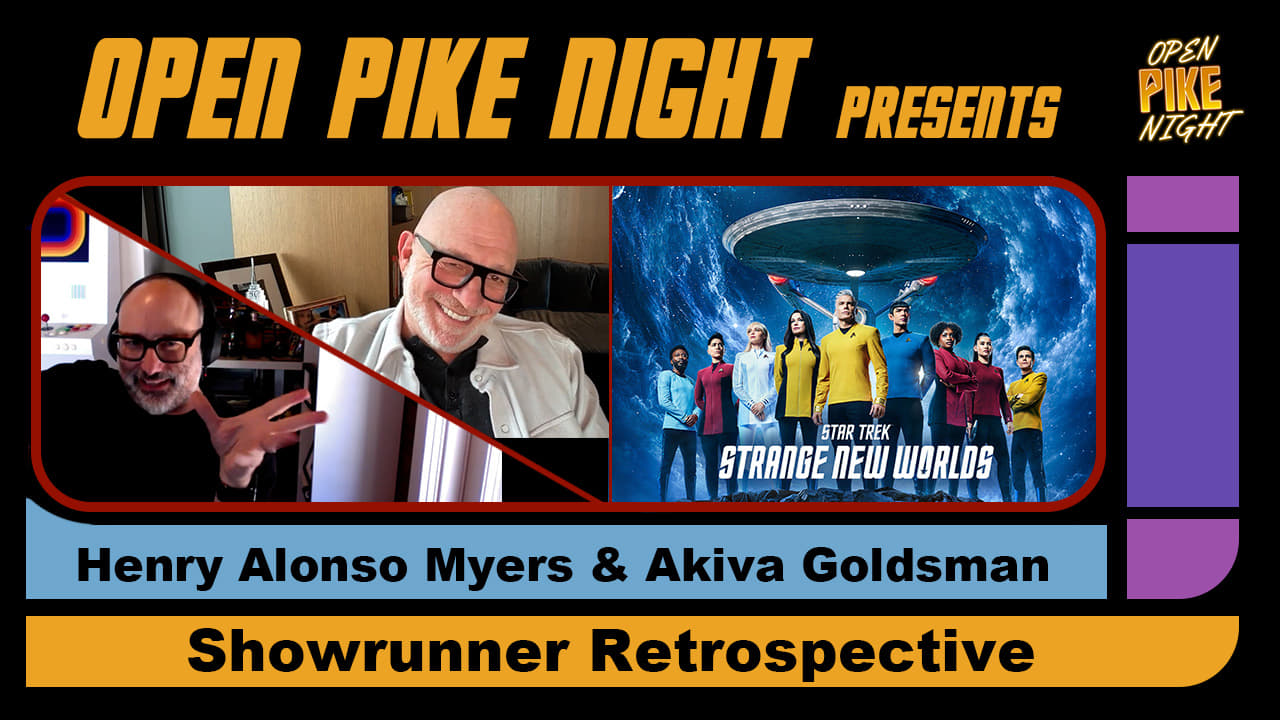
Akiva Goldsman and Henry Alonso Myers join Open Pike Night to discuss the big swings of Season 4, fan reaction, the series’ coming end, and the Doctor Who crossover that almost happened.
Season 4 of Star Trek: Strange New Worlds gave us space ghosts, space dragons, Earth dinosaurs, space babies, space puppets — and even space Deidre Hall. With the season now complete, showrunners Akiva Goldsman and Henry Alonso Myers returned to Open Pike Night to look back at what may have been the show’s biggest swing yet.
Along the way, they opened up about the sometimes-polarized response to the season’s genre-bending episodes, why they reject the idea that those stories are “gimmicks,” and how learning the series would be ending forced them to rethink the Season 4 finale. They also discussed the six additional episodes they fought for to properly finish the story, the approaching handoff from Pike to Kirk, and just how close a Doctor Who crossover came to actually happening.
And, because this is Open Pike Night, we also finally got a name and backstory for that Tellerite who keeps hanging around the Enterprise.
This interview has been edited for length and clarity.
OPN: You’re done with Season 5 — I assume there’s maybe still some post-production stuff happening — but here we are at the end of Season 4 talking about it. Where are your heads at right now?
AKIVA GOLDSMAN: Honestly, I’m grateful. Sad. Grateful. Sad. Grateful. And also sad. I think that sums it up.
HENRY ALONSO MYERS: Here’s the truth: most shows get canceled at some point. The quote I always say is: All shows end; it’s just a question of when. I’ve been on a bunch and this is one of the best circumstances under which you get to end a show, because you really get to find the endings you want. And we’re already past that. The people who watch these have not experienced that yet, so it’s a little bit like, “Oh yeah, that’s right. You guys are getting to experience this stuff.” That’s so great.
AKIVA: As I’m sure you know, the order for the last six was last-minute-ish. We had a bunch of conversations with the studio about really wanting to be able to end it in a way that Henry and I felt was thorough and fulfilled the promise to the audience. In order to make it fiscally viable, we basically shot four and five consecutively. So for us, it was one long, “Oh boy,” season, because we were still writing five while shooting four. We went through all the emotions you go through as you come to the end of a thing. But, of course, in the world it’s two different things: one of which is over and one of which doesn’t begin or end until arguably next year.
OPN: As sad as we are that it is eventually ending, we’re equally excited for what’s coming. I cannot wait to see how it all comes together.
But let’s go back to the beginning of Season 4. You finished Season 3, you’re heading into the writers’ room, you’re breaking the episodes. What are you thinking? What are your must-dos? You don’t have a cliffhanger to resolve this time. It’s kind of a blank slate. Where are you at with it?
AKIVA: One thing I can tell you going in is we didn’t know whether it was going to be our last season. So that’s where we started.
HENRY: It’s funny because I feel like, in some ways, we try to enter every season with the idea that, “All right, if this is the last, we should really try for everything that we didn’t get to do before.” So a lot of the stuff where we were pushing the boundaries of were things where we were like, “Okay, what have we missed in Star Trek that we really want to bring back? And what are things that feel like Star Trek but haven’t been tried yet that we would like to do and show as Star Trek?”
“Because we’re nine at heart, we’re like, ‘And also dinosaurs.’”— Akiva Goldsman
AKIVA: We often start with character arcs.“Okay, who needs what service?” As the show reaches an accumulated mass, who’s gotten it? Who hasn’t? It’s sort of like all your kids are at the table and you’re like, “Has everybody been served? Is there a dish we haven’t served?”
We try to figure out where the characters are going first. Then we kind of go, “How does genre accelerate that, when we’re going to do genre? Where does that fit?” It’s not just a random, “Hey, wouldn’t it be fun if they sang?” As Henry has always said about Season 2, what was great is that at a moment where we needed a lot of resolution, the characters got to sing their subtext.
And then, of course, because we’re nine at heart, we’re like, “And also dinosaurs.”
HENRY: That’s pretty much it. You spend a lot of time thinking, “What are the big, crazy things that we want to see?” Some of those are puppets and some are dinosaurs, and some are the shuttle landing on the ship. We went to great lengths to actually build a three-quarter-sized shuttle that we could see our characters entering and exiting from, because that was a thing where we were like, “This feels so Star Trek, and we have the pieces. We’re just not quite there yet.” So we did that a lot.
OPN: Is that why it seemed like there were more genres this season? You’ve always done genres, but it felt like there might have been more.
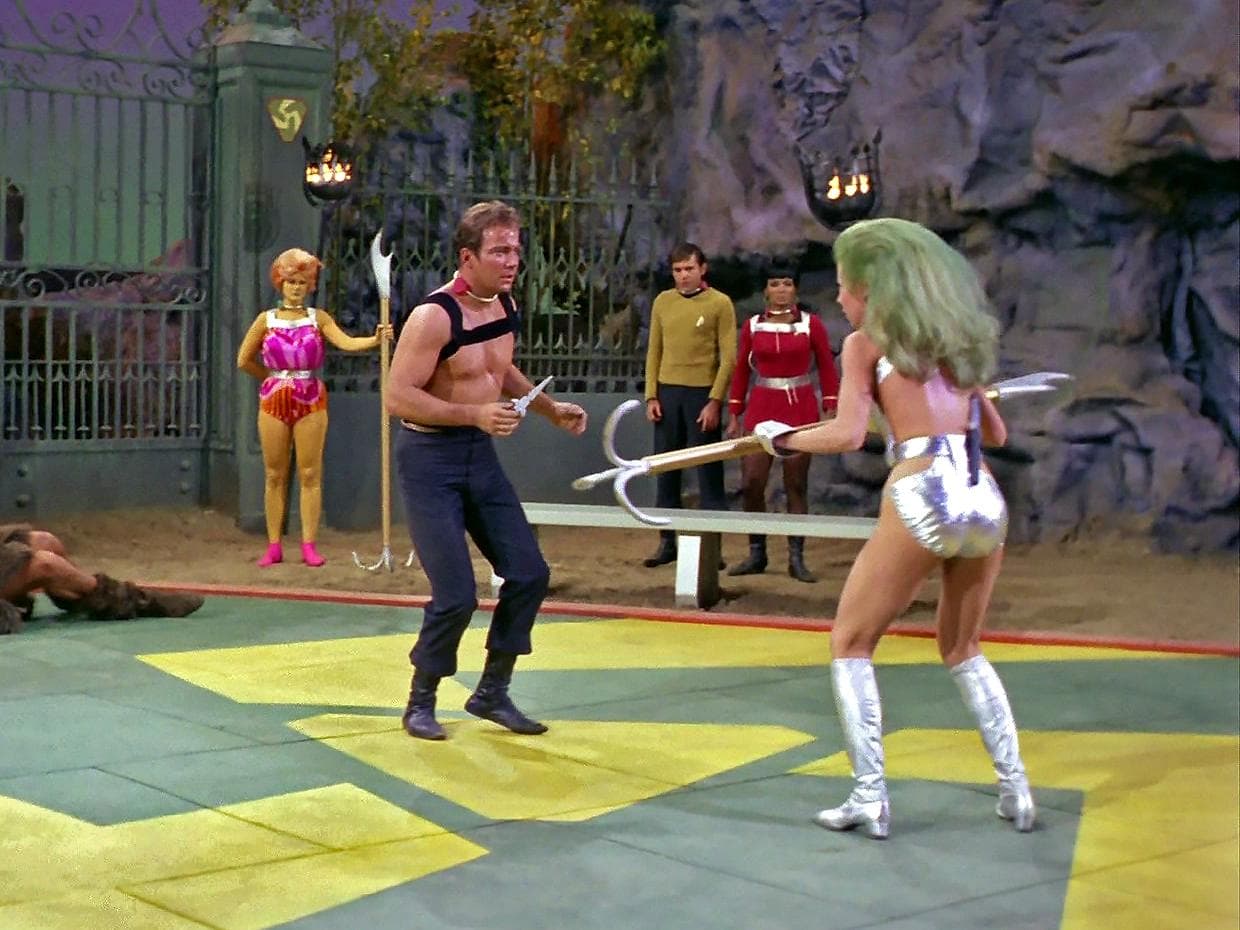
AKIVA: There weren’t, really. I think we were probably similar or even a little less than last season. We’d have to check one-to-one. What happened, which is interesting, is once it became a conversation — more so in the world than with us, because we were always looking at different genres — suddenly everything got labeled that way. Episode two of Season 2, “Ad Astra per Aspera,” that’s a genre episode. We were like, “Okay, courtroom thriller.” But post-musical, because it broke a box that people imagined Star Trek lived in — why, I don’t know — suddenly everything got labeled. And, in fairness, I think there was some selling of that in Season 3.
It became sort of like saying “The Gamesters of Triskelion” is a gladiator episode. Sure. Amok Time is also a gladiator episode. We didn’t do a gladiator episode, but Star Trek has genres within genres. Now, unless it was absolutely straight sci-fi — and by the way, time travel is a genre — it was a “genre episode.” So I think our big swings were probably the same number this year as last year. As you know, we love them. And, for better or worse depending on who you talk to, we’re not doing any of them next year. But tones still shift.
HENRY: We were not the first people to do a black-and-white episode. With the black-and-white episode, we were looking for a genuine scientific reason to put it on the show.
OPN: Outside of a holodeck.
HENRY: Yeah, exactly.
CALL: Our first caller, Val, noted that the episodic format and genre swings make Strange New Worlds particularly rewatchable, with episodes to return to depending on what you’re in the mood for. She asked if there was any particular genre the showrunners wished they had been able to include — or a favorite they did get to tackle.
HENRY: We tried to do a Western and did not have a lot of the things necessary to do it. I think that was easier to produce in and around Los Angeles than it was in Toronto. We showed a little piece of it, but we didn’t do the whole thing.
AKIVA: I still think the musical is my favorite of what we would call the genre swings. I just find it so delightful and amazing, and I’m so impressed by the cast. Obviously, as we’ve talked about, we try to use genre to accelerate the storytelling — really, character storytelling — and in some ways it was never more spot-on than in that one.
OPN: Akiva - Robbie Thompson, when talking about “TheGriffin Incident,” described your bloodlust as having “no bounds.” This season really seemed to amplify the physical damage our crew takes in a way I found both visually and narratively compelling. Was there a conscious effort coming into the season to say, “Let’s really raise the stakes on these guys?”
AKIVA: The deeper you go into your characters — if you’re doing progressive character development over the course of seasons — you’re getting deeper because you’ve kind of got the low-hanging fruit. La’an starts with, “I don’t really get on with people.” By now, you’ve got to get underneath it and ask why.
I love horror. Interestingly enough, I’m not really a body-horror guy, although in this one I was like, “No, no, a bigger cut in the stomach. Cut the finger.” But I love horror. I think we’ve done pretty well finding our way, but to me, this one was chef’s kiss when it comes to horror. I found it really scary. I do like pushing the boundaries of what the audience will expect and still trying to keep them in.
I directed an episode of Discovery years ago where I had lots of naked people dancing around on stage, and I was told that was not okay for Star Trek. So all I’ve got left is scares. I’m really proud of that episode. I think it’s really effective, and I think it’s an example of how genre can move character.
HENRY: I think it’s also worth saying something about Robbie. Akiva has a deep, deep love and appreciation for pushing horror, and every season we were trying to find a different angle on it. Robbie is a unique, specific talent in that. I know Akiva is going to set the bar high when we’re doing a horror episode, and Robbie has both the skills and the producing abilities to really pull it off.
I happen to love ghost stories, and it was a really great take on a ghost story that happened to go right into the guts of emotion.To me, that’s the horror that works best. It’s not just a “boo.” It’s a “boo” that stays in your gut and won’t go away.
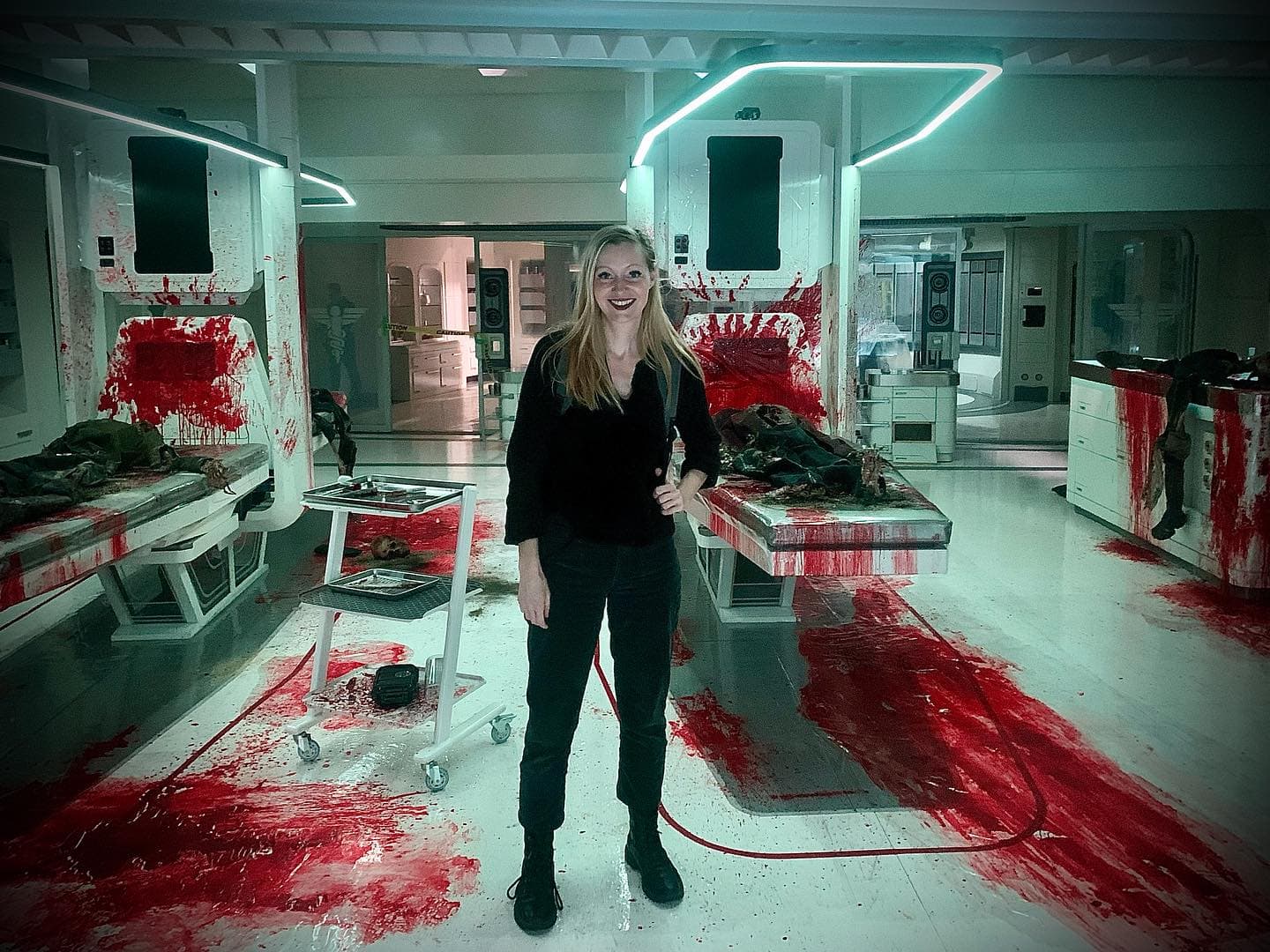
AKIVA: Axelle needs some praise, too.
HENRY: Oh yeah. This is one of the great joys of the show in general. A lot of TV shows set up their directors without having a sense of what the episodes are going to be, because it’s hard to hire them ahead of time. We really leaned in on directors specific to the episode. Axelle, who directed this episode, has a unique ability to bring a genuine visual nature to horror. She makes it scary. She makes it feel real. She knows how to do horror in a way that I think is a unique talent. It was another great mix that we were able to bring her in on that one.
I could point to each one of those directors and be like, “Thank God they were doing that episode.”
OPN: Chris Fisher described Strange New Worlds and Season 4 specifically as “ten Star Trek movies directed by ten Star Trek directors.” I thought that was a great context to look at it in. Why is letting each episode stand out on its own that way important to you guys?
HENRY: When you bring creative people in to do a show and then ask them to adjust and change to make just the show you want, you lose a little bit of their skill and ability. I love being surprised by things. I love when people bring another level. I think this applies to the actors as well. When you ask them to rise up to something hard, they’re excited to do it. When you take what they brought you and put it on screen. So having different directors really helped.
AKIVA: There are shows — I think of Pluribus, and I couldn’t have more admiration for Vince, or The West Wing and Aaron — where there is a sound, a point of view, a storytelling system and perspective that is delivered upon by everybody who works there. It’s singular.
We’re not that. We’re not quite an anthology show, but we’re a collective. We always talk about collaborative art. For us, the process is finding the thing people do best and giving them the opportunity to do it, all within the box that hopefully we’ve built well enough that it lets you go places you might not on a show where the narrative tone is more singular. That’s not qualitative in any way. It’s just a truth. You get certain kinds of things from one that are different from the other. We’re a community of Star Trek storytellers because the world has a community of Star Trek storytellers. We’re also trying to open our arms to the legacy that comes before us and figure out how to touch it again and send it back out into the world. That’s collaborative.
HENRY: I could point to each one of those directors and be like, “Thank God they were doing that episode.” Yana, who did “Human Best Friend,” has an incredible comic background and brought that to it. Jordan, who did the puppet episode — I don’t think we had another director who could do the puppet episode. Anna Dokoza, who did the soap opera, knew how to shoot both single-camera and multi-camera and really get something out of that. Dan, who did Episode 6, has been with the show for multiple seasons and knows how to come in and deliver that stuff. We have a lot of great people who can do the thing that they came to do really well.
OPN: Going back to “The Griffin Incident,” we learn about Division 12, which I think is just an absolutely fascinating inclusion into the Star Trek universe. When you’re including something like that, are you also thinking about how it could be used by other Trek shows? How global are you thinking when you add these world- building elements?
AKIVA: When that one came in, we were like, “Oh, somebody wants to make this show.” X- Files in the Federation? Come on. I don’t think we’re [thinking globally], per se. Things have jumped shows now and then, even in our time, and that’s pretty interesting stuff. But we were thinking about a corner of the Star Trek universe that we know exists because we’ve seen it, all the way back to TOS. We understand that things are not all understandable. So the Federation must, too. Starfleet must, too. What do they do with that? Then we got giddy thinking there must be somebody who deals with it. Why shouldn’t we glimpse them?
OPN: Well, I can’t wait for that spinoff.
AKIVA: You and me both.
CALL: Our next caller asked what the showrunners were trying to say with the Spock and La’an romance. It seemed to be building toward a real connection, only to end — with La’an needing Kirk to fix her.
OPN: People get attached to their on-screen relationships.
HENRY: It’s true.
AKIVA: I’m not sure La’an needs anybody to fix her, but I hear you. I think we thought there was something interesting about a relationship that ran its course in a way that was relatively adult. We thought they were actually people who would grow away from each other, which is kind of what they did. I don’t think La’an goes to Kirk to fix her. I think La’an goes to Kirk because she’s starting to heal. That’s obviously a choice of ours. We know Spock ain’t ending up with La’an, and we know Spock’s heading back to logic. That’s not a choice of ours. But we felt that was also organic to the relationship. It was never in our minds — although it might have been in theirs — that this was something that would last. It was something that would help them become who they’re going to be.
HENRY: The fun thing about Spock is that, if you know where he’s going to end up, we get to tell a story where he learns something new. If it ended the same way it ended with Chapel, that would have felt the same. We thought there was a maturity to the way they ended that we particularly liked.
AKIVA: But we like them together too, just so you know. There was some chemistry there.
HENRY: They have great chemistry.
OPN: Another theme I noticed in Season 4 is not so much characters’ relationships with each other, although there are those, but characters’ relationships with themselves. Doubles, doppelgängers and shadow selves are a big theme this season. We see it in almost every episode. They even see their puppet selves and learn something about themselves through being puppets. Was that something you came into the season saying, “Let’s examine this,” or did it naturally grow as you were breaking the stories?
AKIVA: We’re always talking about people’s relationship to themselves. There’s something very useful about characters having internal mysteries that have to be solved. We have a bunch of them. There are only a couple of ways to do that, and one is through mirrors.
HENRY: One of the great things about writing for Star Trek that I think people don’t always recognize is that you have great performances in lots of other shows, but we get to approach it from a genre perspective. We get to create science-fiction ideas that allow the actors a chance to do things that they wouldn’t otherwise get to do.
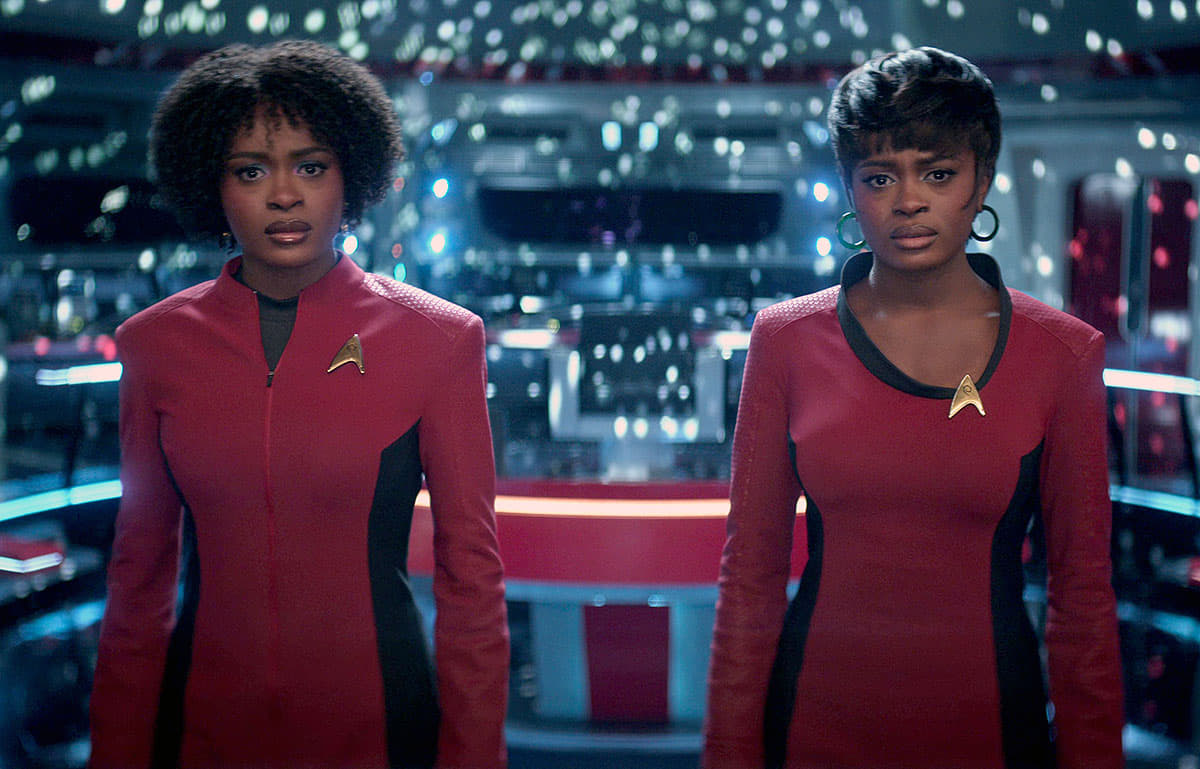
To be two versions of yourself in the same episode and know how to jump back and forth — when you give people an opportunity to rise to something, they really step up and give you great stuff. And when you don’t, they get bored. Then you make something boring, and that’s the end of your show.
OPN: We asked Celia about that, and she 100 percent agreed with your philosophy there. She was very thankful for the chance to do hard things and show what she could do.
HENRY: She’s a delight and a true talent.
CALL: Our caller Michelle grew up loving both The Muppets and Star Trek, making Season 4’s puppet episode particularly special for her. Her question was actually about the forthcoming arrival of Dr. Leonard “Bones” McCoy, and whether the showrunners could share anything about his appearance in Season 5.
OPN: Is there anything you can say about McCoy?
HENRY: I was going to lean on Akiva on this one because he did a lot of directing in that particular episode where he is introduced. I will say that, as a viewer, I was delighted by how he came out. I felt like he rose to the occasion of all the rest of our cast on the show, brought a real perspective, a real point of view. It was a delight to watch. It was extremely well written. That’s my perspective as a viewer.
AKIVA: Henry, talk about the puppet episode.
OPN: That was my next question.
HENRY: That was blood, sweat and tears for a long time. It was six to eight months of prep. It was a lot of design work. It was calling on a lot of people to do things that were extremely difficult. It falls into this level of comedy that is more tremendously hard than people realize and probably don’t think anything of at the time. We had to rebuild huge chunks of our sets in order to put them in. We had to have an entire new division of puppeteers come onto the show.
The thing I took from it that I think was most important was every day I would come to set and see our puppeteers coming in to try to do performances that emulated the work of our cast. I would catch them before we were even shooting, and they would turn to each other and say, “Guys! Guys! We’re on the Enterprise today!” They would say this every day, and they had this joy and happiness. I feel like it came through on the screen when you saw what they did. I thought there was a version of it you could do in Star Trek. I was delighted that we got a chance to do it. Not everyone gets to do every crazy thing they want to do. For me, that was checking a box on the things I always wanted to do in my life.
OPN: Walking through the set, just looking around at all the Muppets — the Jim Henson puppet versions of your characters — you must have felt a little bit like Willy Wonka. “Look at this playground we’ve created.” Was it like that?
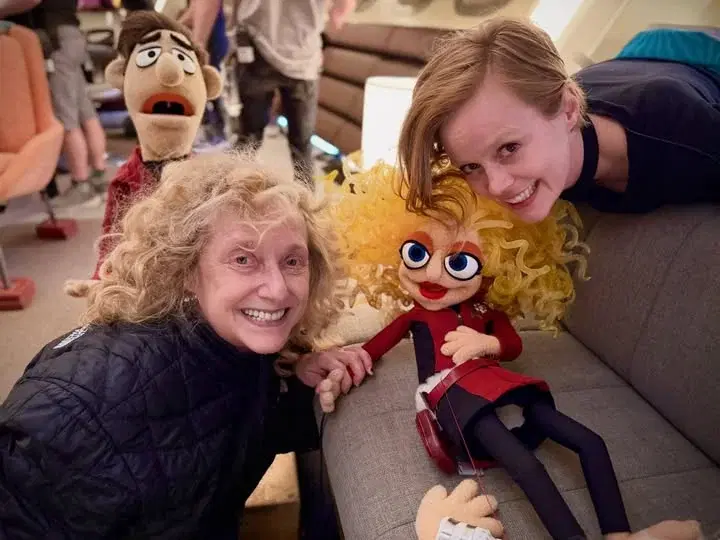
AKIVA: The Venn diagram of puppeteers and Star Trek fans, as Henry says, was just extraordinary. That joy was infectious.
And then, of course, there was Puppet Pelia, which just rules supreme over all things. Not just puppet things. All things.
It’s the greatest thing ever made.
OPN: Another thing I noticed: the last few seasons, you’ve had a lot of fun with the opening title sequence, matching that to the genre you’re coming at, and having some outtakes at the end of Season 3. Although this season seemed maybe tailor-made for those opportunities, we didn’t really see many of them. Was there a reason to step away from that?
AKIVA: We had some outtakes and some stuff at the end of the soap, right?
HENRY: We did. I think the thing we were also concerned about was we didn’t want to make it feel like we were trying to alter Star Trek from what it was. For instance, in the black-and-white episode, we were like, “It is a black-and-white episode, but we’re still doing a Star Trek episode.” So part of the joy of it is to cut from what is clearly black-and-white to the color that you’re used to. We put elements of it in the opening titles. There are pieces of a lot of where we’re going to go in the season throughout. You see the dinosaurs. You see the shore-leave planet. You see a black-and-white section that the ship is shown in. But we didn’t want to draw too big a circle around the idea that we were changing everything.
OPN: I guess I just wanted to see a Thunderbirds-style opening on the puppet episode.
AKIVA: You’re not wrong.
HENRY: We looked into it at one point, but ultimately decided that the puppets were enough. People had to be reminded that we’re still doing Star Trek here.
CALL Our next caller, Trev, raised one of the most-discussed questions surrounding Season 4. While he said he enjoyed the season overall, the first two seasons had been closer to his personal sweet spot, and he wondered whether the increasing emphasis on genre-based “big swings” and “gimmicks” meant the show was moving away from more traditional science-fiction stories like “Children of the Comet,” “Lift Us Where Suffering Cannot Reach,” “Among the Lotus Eaters” and “Under the Cloak of War.” What, he asked, do Goldsman and Myers see as the central identity of Strange New Worlds when all is said and done?
AKIVA: Graciously, I would take issue with “gimmick.”
OPN: I will say Trev has made a point on our Discord that he doesn’t agree with the gimmick label, but it is the common shorthand being bandied about online.
AKIVA: I can tell you a lot of common shorthand being bandied about online. That doesn’t justify the use of it unless you believe it — which is okay.
But for us, those shows aren’t gimmicks. Like all of us, we do things with our whole heart. I don’t think Henry and I would ever suggest — much less the cast, the writers and everybody else who attended to creating these episodes — that we’re spending our time on gimmicks. We like those episodes, obviously. We believe deeply in them, and applaud your ability to like and dislike whatever you choose to like or dislike. I have watched over the season as, to an episode, everybody’s favorite is everybody else’s least favorite. It’s amazing. They alternate. So, again, with all due respect, there’s an interesting conversation to be had which is a little less about what you like and a little more about what Star Trek is. In my view, Star Trek is much more diverse narratively. And that’s okay. We don’t have to agree. But I would ask that one reconsider the use of terms that suggest these are ip and non- serious attempts at storytelling, whether you like them or not.
OPN: I am curious about his question on what you view the identity of Strange New Worlds as. I wouldn’t disagree that it has shifted a bit from Season 1 to Season 4 — just the balance of traditional episodes to genre swings.
AKIVA: Again, I’d be interested in discussing what a traditional episode is or isn’t. But let’s have this conversation again after Season 5. Look at the whole object and see what you think its identity is. I’ll be able to tell you then.
HENRY: Age gives you a different perspective on a lot of this. Some of the stuff that was most attacked in the ’90s and early aughts in Star Trek is some of my favorite. There’s so much stuff they do on Deep Space Nine that was considered “not Star Trek.” It was bending things too far away from what was Star Trek, and those have come to be some of the best Star Trek ever made. Even Enterprise, which I think got unfairly maligned for a lot of really amazing stuff that they did. I think time will hold up well.
My genuine feeling is there’s not a single episode of our show that didn’t have some blood, sweat and tears in it. We fought to make the best version of everything we could make. We wanted to push the boundaries of what you could do in Star Trek, not because we wanted to change Star Trek, but because we have things they didn’t have back then. We have VFX elements they just didn’t have. We have incredible opportunities to build and show things I wish they could have done back in the day. But in our hearts, we are trying to do the best version of Star Trek as we’ve come to know it.
AKIVA: I also think there’s been this odd merging of fandom and criticism, and they’re actually different things. I’m really interested in a conversation about why something is or isn’t Star Trek. I’m sure there were those — and I don’t raise anything we’ve ever done to this level — who thought “The City on the Edge of Forever” wasn’t Star Trek. Certainly there are those who thought “A Piece of the Action” wasn’t.
That’s an interesting conversation: What is Star Trek? “I don’t like it” is not really any of my business. I’m not here to get you to like it. I’m here to try to do my best to create something that I believe is Star Trek and hope that you like it, because everybody has individual taste. I think conflating those two things is interesting. I’m watching the Star Wars reactions today and I’m just like, it’s just people wanting to say, “I don’t like a thing.” Okay. Don’t like a thing. Don’t watch it.
OPN: And to Henry’s point about time, which I totally agree with, I think expectations come into play there, too — people expecting something to be what they necessarily want it to be instead of meeting it on its own terms. I’ve come to think of Strange New Worlds as: We’ve always said we want 26 episodes. Give us 26 episodes. That’s my only criticism of Strange New Worlds: We want more. I like thinking of these as the ten most remembered, most talked-about episodes from a universe where there were 26. These are the ten that people love to talk about the most. The biggest swings? Give them all to me.
HENRY: I get that because I came up watching 22 to 26 episodes a season. The "comedy one” in that time, there were probably a couple of them because you just had to get these things out. They’re hard to produce. But what they also did was draw in people who wouldn’t necessarily know this was something they would love. One of the things I felt was important for our show was to widen the scope of what people would expect from it — to get people who wouldn’t think they’d like Star Trek to like Star Trek, as well as people who love Star Trek.
AKIVA: To me, that’s the thoughtful conversation: Is it worth attempting to broaden Star Trek’s reach? I can tell you, I don’t think we did. Fundamentally, it turns out, if you look at the numbers, Star Trek seems to have a ceiling. You can drop below it, but at least in its current iteration on this platform, it has a ceiling. But part of what we believe is valuable about Star Trek is that it transported people who weren’t aware of it somewhere else. Henry and I are both people who were profoundly transported by Star Trek at an early age. Could we do that for people who weren’t just straight-ahead sci-fi?
With all modesty, we can make those episodes. We like those episodes. We love those episodes and we make them. What we hoped to do was make our arms wider so there were more Star Trek fans, new Star Trek fans, and fewer barriers to entry. Again, I think if our numbers had done that, we’d still be on the air. That was a conscious goal on our part.
CALL: Our caller Lucy asked about the challenges of utilizing Strange New Worlds’ large ensemble, but also raised an intriguing question about the season finales. With the show’s future frequently uncertain, how much did that uncertainty shape the way each season ended — particularly Season 4?
AKIVA: What you see as the finale of Season 4 is not what we designed. It’s what we redesigned. We weren’t sure what was happening, but we were told at a certain point that we were not being picked up. So began the negotiation where we said, “But wait. We can’t do that.” There are a bunch of folks who aren’t in canon. We’ve got to reconcile that. We’ve got to place them. We have to let them find their future. They can’t just drop off the edge of continuity. So they said, “Make a movie.” And we said, “No.” I mean, a TV streaming movie. We said, “No, no, we can’t possibly.” Because it’ll either be all talk, talk, talk, or we’ll just blow shit up. There’s not enough time to do both things.
To their credit — God bless them — we went back and forth. Fundamentally, there were parameters on what we could do and how much money we had. They said, “What do you need?” And we said, “Minimally, six.” And they said, “Okay.” We showed them how we could do it in a way that was both our show and wasn’t going to break the bank, which included shooting it directly after Season 4 so we didn’t have to close down, start up and do all the things attendant to that. This happened while we had already broken the finale, and it was different.
Once we realized what was happening, there was a lot of re-breaking and rewriting to get to something that was fundamentally the story we had broken and had a lot of the promise of the original idea, but also pulled out some things that we then got to save and do in a more thoughtful way because we had more time. We were dancing as fast as we could, and my partner Henry was typing as fast as he could.
HENRY: By Season 4, we had a lot of great writers on the show who really understood the show and who we could lean on. I could speak to specifics, but I would rather speak to all of them because they knew the show, they loved the show, they loved Star Trek. They put their own blood, sweat and tears into it. That’s one of the reasons we were able to get that show done — and Season 5 done.
OPN: The other part of Lucy’s question was: How do you utilize your ensemble cast?
HENRY: Akiva started off talking about how we usually look at the character stories for every season, and that’s literally where we start. We try to give everyone at least one big story that is theirs or deals with them. “Off Hour” is a Chapel story, and it also happened to have a Scotty story in there as well. Because of the structure of that type of episode — what people would call a bottle show in the old days, because it was only on our sets and the AR wall — it allowed us a lot of scene work where we got to lean on lots of different people. It’s actually very similar to Episode 104, basically like a submarine episode we did with the Gorn, where we got to cut all the way around the ship and show different sections of the ship and lots of different people in those sections. It gave everyone a chance to do something. Not every episode can be about everybody. Sometimes you get to lean on people in different ways. Sometimes it’s an episode where we follow one person going to a planet. The horror episode this year was really about three people, and that was it. Everyone else was in it, but not in it, as we eventually discovered.
One of the great things I wish I had learned early as a TV writer is that you write scenes you think are cool, but the real thing that makes a difference is: Did I give the actors something to do? You have to put yourself in the heart and mind of the actors. You have to do this for the director, you have to do this for everyone in your crew, but you really have to do it for the actors. To that end, writing a simple scene with two or three people is almost the easiest and best thing you can do, but you have to give everyone a purpose. A lot of it is just: Let’s take what is traditional for Star Trek and give everyone a point of view. This is the kind of thing that made Chapel really great to write for, or Ortegas really great to write for. Ortegas is a person who is literally in the middle of the bridge and has a comment on everything, but it allows her as a character to reveal things. Star Trek is the kind of thing that looks really easy on the surface, and it’s actually tremendously hard. It’s tremendously hard to find ways to give the actors something to play.
AKIVA: Henry just said something which I think is really important: We don’t try to service everyone every episode because there are too many of them. We try to service everyone well sometimes, rather than everyone a little all the time.
HENRY: If we’re going to put them in one scene, let’s make it a really good scene. That’s the thing people remember. The Pike-Uhura scene in the finale this year — there are a couple of them, but there’s really one core, simple emotional scene. It’s memorable, and it’s just two people talking.
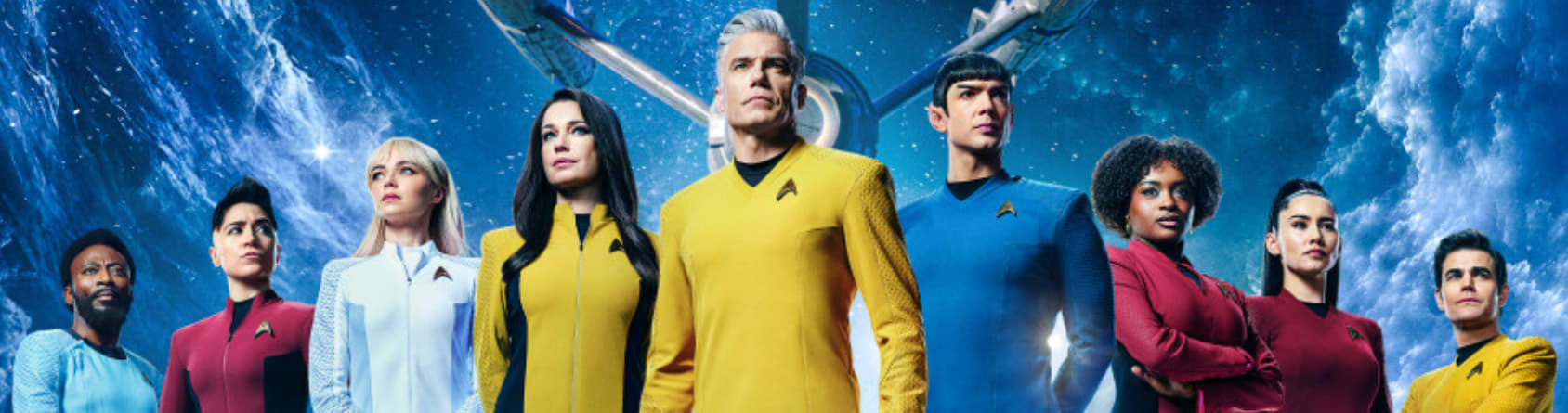
OPN: Speaking of those characters and writing for them, we’re seeing Captain Kirk — not yet Captain Kirk — become more and more of a character on the show, getting his own through-lines and arcs. How are you balancing bringing in THE Captain Kirk with a show called Pike?
AKIVA: Well, the show’s not called Pike.
OPN: I was referencing something Henry told me in the last interview.
HENRY: Oh yeah. That was a Buffy quote that they used to say back in the day. If they couldn’t find the story, they’d say, “Show called Buffy.” But it’s true. That is not the story.
AKIVA: We know the story. The story leads us to Kirk. We’ve known that from the beginning. You’ll see there’s been more and more Kirk because we know where this story ends. It became clear pretty quickly that we weren’t going to have eight seasons or ten seasons.
I don’t think we were surprised when they canceled us after Season 4. We were thrilled that we got another season. But as you can see, we’re already tracking toward being able to say it’s a handoff. We love Anson and we love Paul and we love both characters. We didn’t want Anson’s Pike to hand it over to an imaginary Shatner’s Kirk.
HENRY: It speaks very well of the type of actor Anson is that he would argue — and I would argue — that what we would say is, “Show called Enterprise.” He’s very much an actor where you give him a big scene to do and he comes in full-tilt boogie. He brings all of his energy. But he does not want that all the time. He wants those scenes for the scenes that a ect his character. And the story of how he hands the ship off to Kirk is not a story that was told. So it’s a story we get to tell.
“Everybody said yes for a second...Then they realized what they said yes to.”
OPN: We’ve heard recently that you got pretty far down the road on getting a Shatner episode happening, as well as pretty far down the road on a Doctor Who crossover. Since we know neither of those are happening now, can you share what we might have seen?
AKIVA: We had a few different Shatner ideas. The one that actually seemed for a second like it really might happen was the Doctor Who crossover, because Russell was engaged, too, and we were going back and forth and talking about how we would do it. We were talking about three of our cast going there and then three of theirs coming here. Then it was, “What do we do? Because they air and we drop. How does that work?” It was a thing. It was a thing.
OPN: So the Shatner and Doctor Who ideas were going to be the same episode?
AKIVA: No, no. Two totally different ideas.
OPN: Gotcha. So Doctor Who was the one that came closest to fruition?
AKIVA: Yes. The sad thing about it was everybody said yes for a second. We were like, “What?” Then they realized what they said yes to, and they were like, “No, we were kidding about that.”
OPN: Can you give us the pitch for the Shatner episode?
AKIVA: There were a couple. There was an animated one, sort of TOS animation. There was a “City on the Edge of Forever” return with him and Joan Collins — Edith Keeler. Him now having been aware of the timeline, what could he influence? What if he had stayed? They never got very far. And it’s too bad.
OPN: But we get to play in “what if.”
HENRY: We love Shatner. We would have loved to have been able to find something that worked.
OPN: One of my favorite through-lines of this season was the Cadet Asha storyline. I loved her, and I was very glad she did not suffer a similar fate to Ensign Gamble. She does decide to leave Starfleet. As the showrunners, do you have any idea what her fate is? What is Asha’s future?
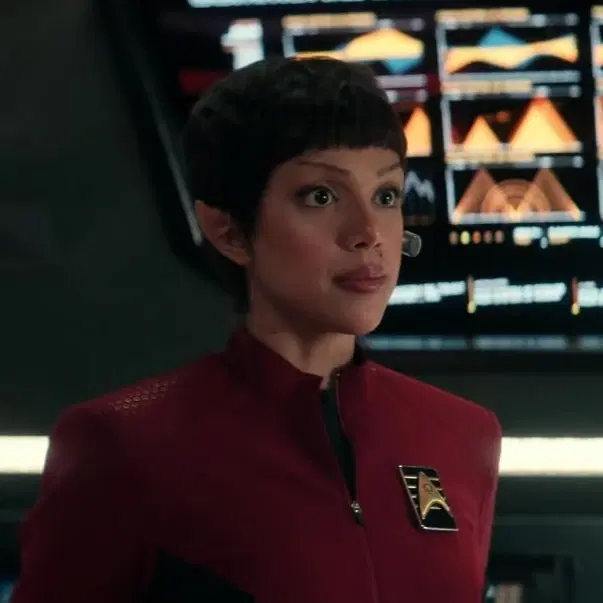
HENRY: She goes back to Vulcan. She tried to make something work that she wasn’t wired to. I think a lot of that was about Uhura wrestling with the idea that Uhura was as good as you possibly could be at her job, and that wasn’t enough because this person wasn’t willing to go in that direction. She could never make her someone who was happy at Starfleet, but she could show her what she experienced.
AKIVA: I really appreciate you asking because, in fairness, it never even occurred to me what happened to her. It’s a great question because, of course, she was created, as Henry said, to reflect some character growth for Uhura. But yes, I wonder. It’s a great question. She was very funny.
OPN: It’s a credit to what a fully developed character you made for her. I loved her.
Another fully developed character I loved: This season we see a Tellerite hanging around in the background of a lot of episodes. Can you tell us anything about this guy? I asked Chris Fisher. He just said they loved him. I asked his name. He didn’t know, so I told him to make one up and he said “Frodo.” Can we set that in stone here and now?
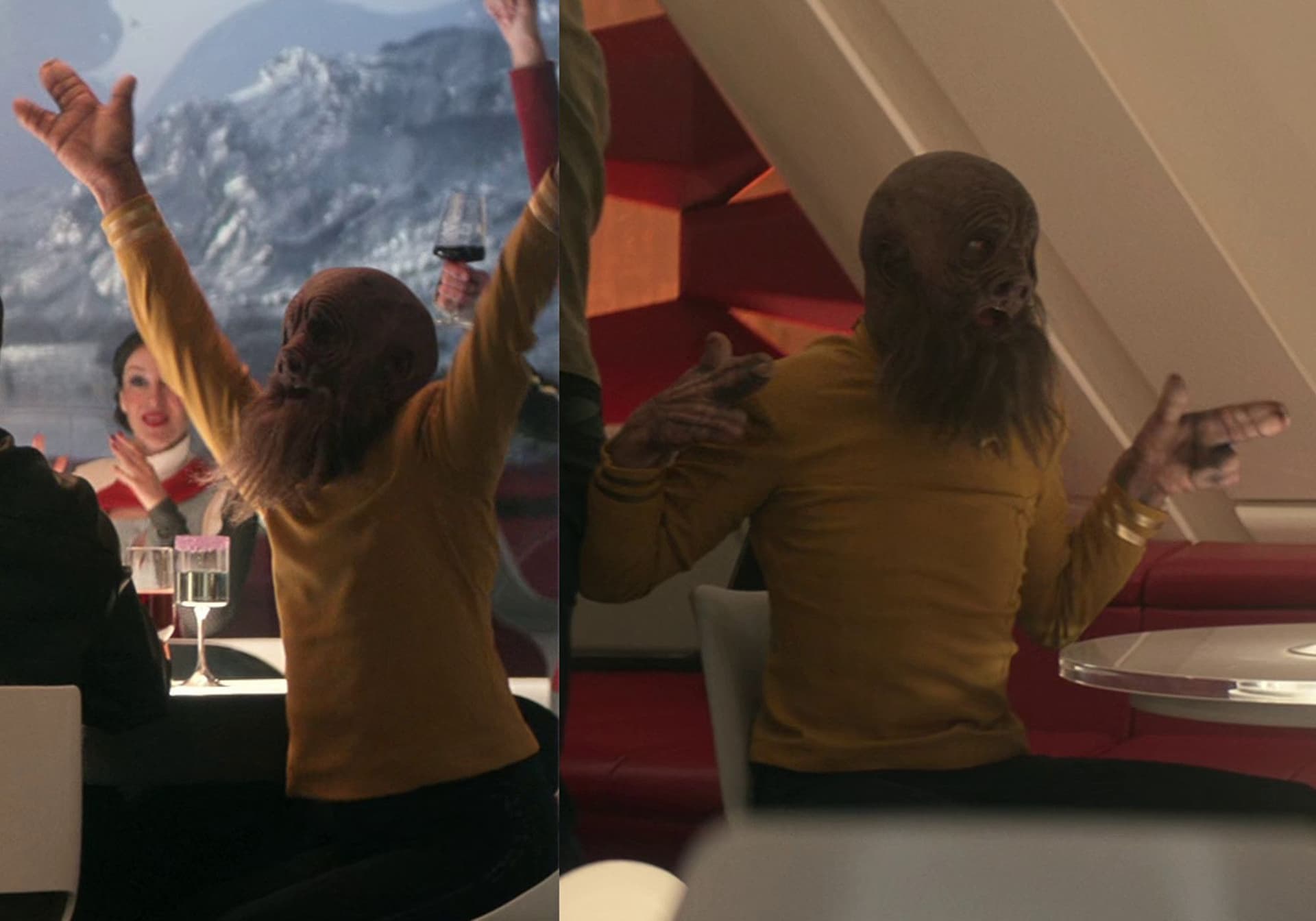
AKIVA: No. His name is Cameron.
OPN: Cameron! Okay. I like this better than Frodo. (Note: Cameron was the interviewer here)
AKIVA: He came to the ship during a diplomatic mission. “Stowaway” is not the exact right word, but he chose — much to the chagrin of his crewmates — to stay. It’s an early phase of Tellerite-human relations, so it’s not exactly political asylum because they’re obviously allied. But there were certain crimes that Tellarites commit that we don’t consider crimes. So he asked for asylum on the ship, and Pike gave it.
OPN: It’s canon now.
AKIVA: You’re welcome.
"I wish everybody liked all of it."
CALL: Our final caller, Abby, asked Goldsman and Myers to turn the conversation around. Fans had spent months reacting to Season 4 — but what did they take away from the season and its reception?
AKIVA: I’m thrilled to have done it. I’m thrilled to have done the show. I am both bemused by how polarizing some of the episodes are, and it makes me sad because what we try to do with Star Trek is connect. You always wish you could connect to everybody. We live in a world now where there’s a lot of conversation about that which doesn’t connect. I wish everybody liked all of it.
It’s an unrealistic expectation, but we all start out that way. And I would be lying to you if I said we don’t finish that way — or at least me, in my old age. But I’m deeply, deeply, deeply proud of it.
HENRY: I couldn’t agree more with everything Akiva just said. On some level, I’ve always seen our job as being professional viewers. There’s a lot of writing and producing and organizing that goes into actually putting it together, but at the end of the day, when you’re looking at cuts, you’re just sitting there saying, “Do I have the feels?” Is it making me laugh? Is it making me cry? Could I be more scared? Could I be happier? Could I be delighted? You’re trying to create those feelings. And every one of the episodes did that for us.
I borrowed this from a guy I worked with on another show: We play with it in the room, all the writers, until we’re all jealous of it and wish that we could have written that episode. I still feel that way. I would be disappointed if we hadn’t tried to push the envelope, if we had just done what I would consider standard, fastball-down-the-middle Trek. When someone gives you a chance to do this, you really should try to push it and see how far you can make it go. Drive the car fast. Drive the car off the edge of the cliff and see if you can land it. To me, that’s worth it.
On some deep level, I want everyone to like it. But what was also interesting was that every reaction we got to every episode was also very predictable. We had the reactions we expected. Sometimes you hope you’ll open up and win over more people, but the people who love it do love it, and the people who get angry about it do get angry about it. The one thing I’m certain of is that everyone has found something this season that is the Star Trek they love. There are people you will never reach, and that’s okay. I wish those people well. I’m glad they continue to love the Trek they love.
But I went to get bagels the other day wearing my puppet shirt, and I’ve never had such an incredible response from a guy working at the bagel shop. When you see someone who’s like, “Oh my God, you brought me so much joy. Thank you so much for that” — we do entertainment. That’s what we do for a living. When you reach someone and realize you gave them something, and they give it back to you in a fraction of the feeling they felt, that touches my heart.
OPN: Every episode is someone’s favorite.
Your story was the point I was going to make. I’m sure you guys have your fingers on the pulse of the reaction more than I do, but there’s the online reaction and then there’s when I go out into the real world. I see people wearing their Star Trek shirts, or they see me wearing mine, and almost to a T, when I ask, “What do you think of the current season?” they love it. My mom is an old-school fan and not a horror fan. Her favorite episode is “TheGriffin Incident.” She loved that one.
HENRY: That’s awesome!
OPN: We won’t try to get any more spoilers about Season 5. We’ll save it all for those who wait.
Year One — it sounds like the current status is it could happen, but probably not. Without asking you to share it, do you have an outline right now of what Year One would look like if they were to greenlight it? How far into it are you thinking?
AKIVA: No, no, no. I think it’s such fertile ground that — when I say “it writes itself,” it means all of us sit around and figure out how to write it — but I think it’s such rich terrain. So many things would emerge. I don’t want to say what I think they might be because they will start to distinguish themselves from what might exist in the last episode of our show. But I do think there are miles and miles of story there.
OPN: Absolutely. We all love the characters. I think everyone, whatever reaction they have, has that reaction because they love the characters and they love the show. And we can’t wait to see what’s coming.
Before I let you go, I do have to ask you both one question: What’s your favorite episode from Season 4?
HENRY: From this season?
OPN: From Season 4. Henry, what do you got?
HENRY: I’m torn between—
AKIVA: No, you have to pick one!
HENRY: All right, okay. You’ve got to pick one. I’ve got to pick one.
AKIVA: I’m torn between seven of them.
HENRY: I think the finale is probably my favorite. The idea of doing the story between two Uhuras — I feel like there’s something so fundamental, simple, great and emotional that you can do in that. And to be able to hand that to an actor and say, “You get to play two versions of yourself. You’re the person you ght with and you’re the person who is your best friend.” It was a time-travel version — we’ve tried to do a different time-travel version every season — that we had not done. I was really proud of that one.
OPN: Akiva?
AKIVA: I think it’s six.
OPN: Yes!
AKIVA: Oh God. Babs and Jess are just nailing it. It’s a funny analog, but to me, in its best moments, it was like a great old episode of MASH*. There you are: the healers suddenly in a circumstance where all they have is each other — as doctor, as patient. Boy, the writing was great. The directing was great. The acting was great. Obviously, there are others we’ve talked about that I have a close connection to, but boy, oh boy — at the end of that one, and you could see it on the day, there’s just heart there.
OPN: You guys made me forget that M’Benga was a legacy character. I was worried for him. I was like, “I think they might kill him.”
HENRY: We talked about that a lot in the room. “Can we pull o that people think he might die?”
OPN: I’m not joking.
AKIVA: That’s our job.